
Why an Arranged Pop Ensemble Suits Events

The first arrival at a drinks reception sets the temperature for the whole occasion. Guests are collecting a glass, greeting familiar faces and taking in the room. An arranged pop ensemble gives that moment a soundtrack with instant recognition and proper style: songs people know, recast with character rather than simply played as replicas.
For events that need to feel polished from the first note, this approach sits in a sweet spot. It has the pull of popular music, the musical detail of a live jazz-inspired group and the visual confidence of a considered performance. Familiar choruses still land, but the overall sound feels tailored to the setting.
What is an arranged pop ensemble?
An arranged pop ensemble performs well-known songs through a distinctive musical lens. Rather than reproducing the original recording note for note, the group reshapes it for its own instrumentation, vocal style and atmosphere. A noughties pop anthem might become a smoky swing number. An 80s classic may take on a soulful groove. A current chart favourite can feel as though it has always belonged in a late-night piano bar.
The difference is arrangement. Tempo, rhythm, harmony and dynamics are chosen with intention, so a recognisable song gains a new personality without losing the hook that made it popular in the first place.
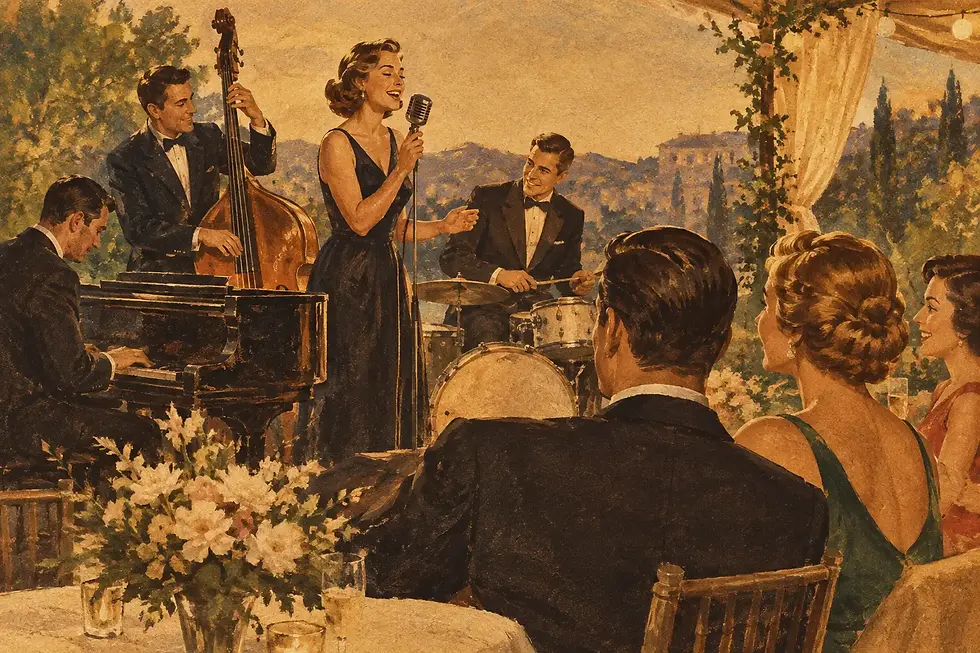
For a compact quartet, double bass, drums, piano and powerhouse vocals create a particularly rich palette. The piano can carry sparkle or drama; the bass brings warmth and movement; drums add lift without swallowing conversation; and a great vocalist makes every familiar lyric feel immediate. It is a full, live sound with none of the clutter of an oversized stage plot.
Familiar music, better suited to the room
A standard cover band can be exactly right when the brief is a full-volume dance floor from the outset. But many celebrations, corporate functions and hospitality events need more finesse earlier in the schedule. Guests want music with energy and identity, yet they also want to talk, network and enjoy the setting.
That is where arranged pop earns its place. The recognition factor creates an easy connection across generations, while the vintage treatment keeps the mood sophisticated. A guest may notice a favourite 90s chorus halfway through a conversation, smile, and stay engaged with both the music and the people around them. It is atmosphere with social intelligence.
There is a trade-off, and it is worth being clear about it. If the only priority is recreating a festival-style headline set, original-style pop production or a large party band may be the better fit. If the aim is to make an event feel distinctive, relaxed and elevated while retaining broad musical appeal, a curated ensemble offers something more memorable.
Where an arranged pop ensemble works best
Drinks receptions and arrival moments
The early part of an event deserves more than background noise. Live arrangements give a reception a sense of occasion before a word is spoken from the stage. The sound can be buoyant and inviting without forcing itself into every conversation, helping a room feel lively rather than merely busy.
For weddings, that can mean a stylish soundtrack while photographs are taken and guests settle in. For corporate hosts, it creates a polished first impression that says the evening has been planned properly. At a private party, it immediately separates the occasion from a standard dinner booking.
Brunches, lunches and hospitality settings
Daytime events need a different kind of musical judgement. Too quiet and the room can feel flat. Too forceful and the music becomes a distraction. Vintage-inspired pop arrangements bring rhythm and warmth without turning brunch into a nightclub at noon.
This is especially useful for venues where appearance matters as much as sound. A smartly presented quartet has a natural visual presence, while familiar songs help keep the mood open and accessible. Guests do not need specialist jazz knowledge to enjoy it. They simply hear brilliant songs presented with a fresh old-school twist.
Corporate events and awards evenings
Corporate audiences are rarely one musical tribe. The room may include colleagues, clients, leadership teams and guests of different ages, all with different expectations. Recognisable pop provides the common ground. Thoughtful arrangements make it feel appropriate for a premium function rather than a playlist in formalwear.
An experienced event ensemble also understands timing. Music may need to welcome guests, fill a changeover, support dinner, introduce a presentation or raise the energy before a later set. Those shifts matter. Professional live entertainment is not just about a good song list; it is about reading the pace of the evening.
Private parties and featured sets
At a birthday, anniversary or house party, an ensemble can begin with easy-going sophistication and build into something far more celebratory. The same core line-up can support cocktails in a corner of the room, then step forward for a focused performance when it is time to bring everyone together.
That flexibility is valuable where space is limited. A compact group avoids the practical demands of a large band while still delivering the thrill of live musicianship. It also leaves room for guests, tables, flowers, a dance floor and everything else that makes an event look the part.
The value of compact staging
Event planners have enough to think about without adding an unnecessarily complicated production footprint. Access times, power, sound limits, room turns and venue restrictions all shape what is realistic. A small-footprint ensemble can often provide a premium live experience with fewer moving parts.
Compact does not mean slight. With the right arrangements, four musicians can create contrast, lift and genuine presence. The key is not trying to sound like a ten-piece band. It is using the strengths of the line-up: a rhythmic bass line, crisp drums, expressive piano and vocals that lead the room.
This also makes an arranged pop ensemble a sensible choice for venues with character but limited space. Historic rooms, rooftop bars, private dining areas and stylish hotel corners can all benefit from entertainment that fits the architecture rather than fighting it.
Choosing the right ensemble for your brief
Start with the feeling you want guests to take away. “Fun” is a useful beginning, but it is not a complete brief. Consider whether you want the room to feel glamorous, relaxed, playful, cinematic, celebratory or high-energy. The answer guides the repertoire, performance level and set placement.
Then think about the practical rhythm of the event. Is the music there to welcome guests, accompany dining, frame a ceremony or become the main attraction later on? A strong ensemble should be able to shape its performance accordingly, not offer the same volume and intensity throughout.
Ask about repertoire, but listen for range rather than a long list of titles. The most effective set can move naturally between decades and moods, combining 80s and 90s favourites with soul, blues, jazz and contemporary pop. What matters is that the songs feel connected by a clear musical identity.
Finally, choose performers with real event experience. Reliability, smart presentation, clear communication and an instinct for the room are part of the product. Vintage Boombox brings that assurance to familiar tunes delivered new tunes, old-style, with a format designed for occasions that need both character and control.
Why the arrangement is the memory
People may not remember every detail of a canapé or each item on a drinks menu. They will remember the point when a song they love appeared in a completely unexpected style, and the room seemed to notice at once. That is the quiet power of a great arrangement.
For hosts, the best choice is not always the loudest act or the biggest line-up. It is the performance that makes the event feel unmistakably like itself. Choose music that gives your guests something to recognise, something to talk about and, above all, a reason to stay in the moment.


Comments