
Quartet or Duo for Wedding Music?

The moment guests arrive, your music starts doing more than filling a silence. It sets the pace for the first hug, the first glass of fizz, and the first impression of the day you have spent so long planning. Choosing a quartet or duo for wedding entertainment is therefore less about counting musicians and more about deciding how you want the celebration to feel.
A duo can be beautifully intimate and wonderfully unobtrusive. A quartet brings greater musical colour, rhythmic lift and a stronger sense of occasion without turning your drinks reception into a full-scale concert. Both can be excellent choices. The right one depends on your venue, guest numbers, timings and whether the music should sit elegantly in the background or become a memorable feature in its own right.
Quartet or duo for wedding receptions: the real difference
A wedding duo usually creates a lighter, more intimate sound. Think piano and vocals, guitar and vocals, or a carefully arranged instrumental pairing. It is a natural fit for a small ceremony, a relaxed restaurant-style meal, or a reception where conversation is the priority. With fewer players, the visual footprint is minimal and the music can feel personal, almost as though it has been placed there especially for the room.
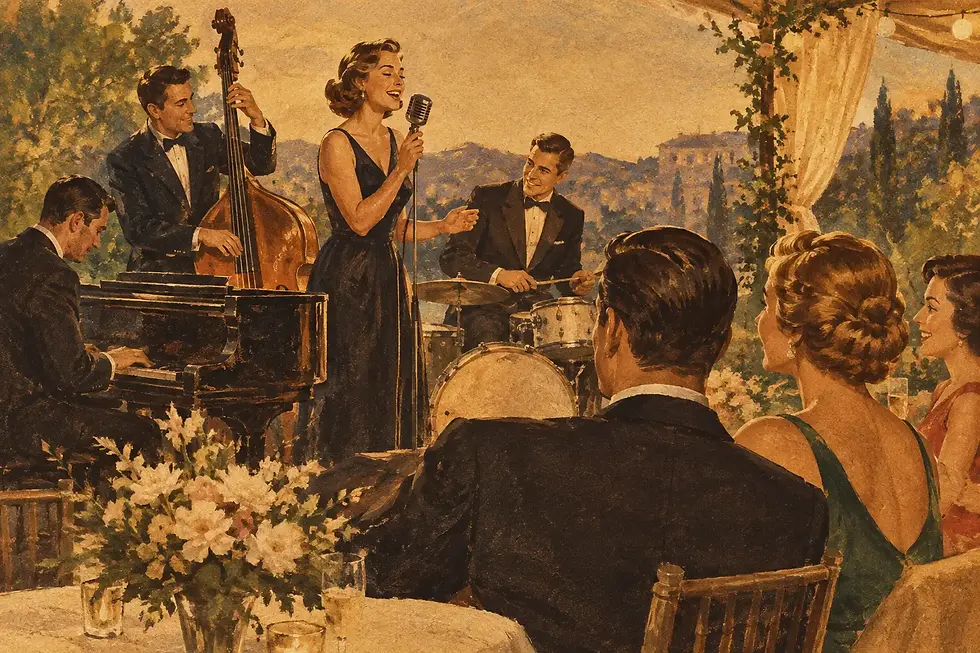
A quartet has more range. With piano, double bass, drums and vocals, for example, familiar songs gain groove, depth and a little more theatre. The bass gives the music warmth; drums provide momentum without needing excessive volume; piano fills out the harmony; and a great vocalist gives guests a clear focal point. It is still refined live music, but with a fuller sound that carries naturally across a garden, terrace, ballroom or busy drinks reception.
The difference is not simply louder versus quieter. A well-managed quartet can play with remarkable restraint. Equally, a duo can make a real emotional impact. What changes is the palette: a quartet has more textures to shape the atmosphere as the room fills and the day gathers energy.
Choose the sound that suits the moment
For a ceremony, subtlety often wins. Guests need to hear readings, vows and the registrar, while key moments such as the entrance and signing deserve music with emotional weight. A duo is often ideal here, particularly in a compact ceremony room. It can make a small space feel considered rather than crowded.
For the drinks reception, the decision often shifts towards a quartet. This is the part of the day when groups form, photographs happen, glasses clink and the formal pressure begins to fall away. Live music should give all of that movement a pulse. A quartet playing stylish interpretations of recognisable pop, soul, jazz and blues can create an effortless social atmosphere, giving guests something to enjoy without demanding their full attention.
During the wedding breakfast, it depends on the room. If speeches are close together or tables are tightly arranged, a duo may be the more practical choice. If there is a generous corner for performance and a longer meal with natural breaks, a quartet can add a sense of occasion between courses without overpowering conversation.
For an evening feature set, the quartet has the advantage. More instrumentation means more dynamics, stronger grooves and a bigger lift when guests are ready to move from polite applause to proper celebration. It is particularly effective for couples who want a sophisticated alternative to a standard function band, rather than a background act that disappears after the first hour.
Space matters, but not in the way you might think
A common concern is that four musicians automatically need a huge stage. Not necessarily. A compact quartet can work neatly in a room corner, beside a bar or on a small terrace, provided there is sensible access and enough space for instruments, seating and safe cabling.
A duo is the simplest option where access is difficult. Historic venues, private dining rooms, narrow staircases and country-house spaces can all bring practical limitations. It also needs less equipment, which can be helpful when venue turnaround times are tight.
But do not choose a duo purely because the room is modest. A compact quartet may still be entirely comfortable, and its fuller sound can help a larger guest list feel connected across a space. Share photographs, a floor plan and your expected numbers with your musicians before booking. An experienced act will give a clear answer on what works, rather than simply saying yes to every layout.
Outdoor weddings need an extra layer of planning. Acoustic instruments and performers need cover from rain, protection from strong sun, level ground and access to power where amplification is required. A duo is easier to reposition if the weather changes, while a quartet can deliver a more generous sound for a lawn reception or marquee. The best choice comes down to whether the outdoor setting is a brief backdrop or a major part of the party.
Think about your guests, not just your playlist
The most successful wedding music is not always a list of the couple's favourite tracks played exactly as recorded. It is music that gives guests of different ages something to recognise, while still sounding like it belongs at your wedding.
This is where arrangement matters. A polished vintage-style quartet can take contemporary favourites, 1980s and 1990s classics, and well-loved soul or pop songs, then give them an old-school twist. The result feels familiar enough to spark smiles and conversations, but curated enough for a stylish venue. It avoids the sense of a generic pub set without becoming too niche or formal.
A duo can offer this same musical intelligence in a more understated form. If your guest list is small, your wedding is centred on a long lunch, or you want music to feel like a lovely detail rather than a headline performance, that restraint is a strength.
Ask yourselves one useful question: when guests remember the reception, do you want them to say the music was gorgeous, or that the room came alive? Neither answer is wrong. The first may point towards a duo. The second often points towards a quartet.
Budget: compare value, not just the headline figure
A duo will usually cost less than a quartet because there are fewer professional performers, less equipment and simpler logistics. For a short ceremony or a small afternoon gathering, that may be exactly the right level of investment.
However, a quartet can represent stronger value when you need entertainment to cover a larger part of the day. Its broader sound can carry a drinks reception, support a wedding breakfast and build into a featured set, giving each stage a distinct feel while keeping one coherent musical identity. Booking one versatile act may also be easier to manage than coordinating separate musicians for each moment.
When comparing quotes, look beyond the number of musicians. Check performance duration, breaks, arrival and set-up times, sound provision, travel, requests, insurance and what happens if timings change on the day. Weddings rarely run to the minute. Vastly experienced performers know how to adapt with calm professionalism when photographs overrun or the meal begins late.
Questions to ask before you book
A quick, focused conversation can tell you more than a long playlist ever will. Ask whether the musicians have performed at venues similar to yours, how much space they need, whether they can provide music for more than one part of the day, and how they manage volume around guests and speeches.
It is also worth asking how they shape a set. Do they simply play songs in sequence, or do they read the room and adjust the energy? For a wedding, the second approach matters. A reception of 40 guests in a glass orangery needs a different musical touch from 150 people arriving into a marquee after a church ceremony.
If you are choosing a quartet, ask whether its arrangements are designed for a compact line-up. The best small ensembles sound intentional, not like a larger band missing half its members. Vintage Boombox, for instance, builds its sound around double bass, drums, piano and powerhouse vocals, bringing new tunes old-style to wedding spaces without swallowing the room.
Let the atmosphere make the decision
Choose a duo when intimacy, simplicity and gentle elegance are the priority. Choose a quartet when you want richer arrangements, a more defined musical identity and enough lift to carry guests from welcome drinks towards the celebrations ahead.
The best choice is the one that feels at home in your venue and true to your day. Give your musicians a clear picture of the room, the schedule and the feeling you want guests to take away. From there, the right line-up will not just play between the moments. It will make those moments feel even better.


Comments