How to Choose Event Musicians With Style

The right event musicians do more than fill a quiet corner. They set the social temperature of the room. Before the first glass is raised, guests should feel that the occasion has been considered: the sound, the look, the energy and the timing all working together.
For a wedding reception, corporate gathering or private celebration, live music needs to earn its place. It should make conversation feel more alive, give arrivals a sense of occasion and build naturally towards the moments guests will remember. That calls for more than a good playlist and a capable band. It calls for a performance designed around the event itself.
Start with the feeling, not the genre
Many bookings begin with a genre request: jazz for drinks, soul for dinner, pop for the party. That is a useful starting point, but it is not the whole brief. Ask what you want people to feel when they walk in.
A black-tie awards evening may need music that feels polished and understated during arrivals, then warmer and more celebratory as the formalities end. A garden wedding might call for a relaxed, sunlit soundtrack at the drinks reception, followed by recognisable tunes with enough lift to draw people towards the dancefloor later on. A milestone birthday can be more playful from the outset, but still benefit from musicians who know when to let the room talk.
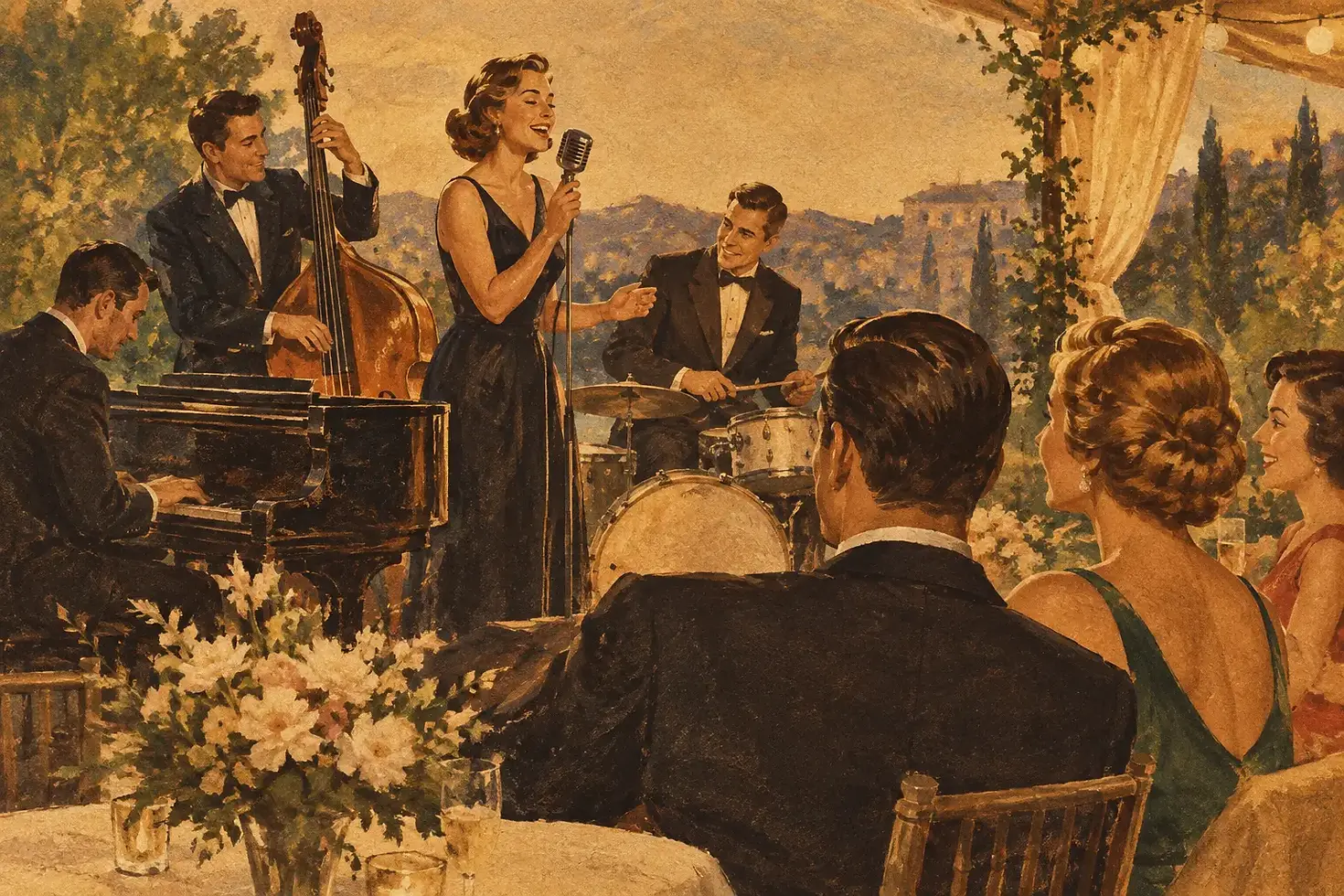
The best live acts read these shifts without making the entertainment feel disjointed. They understand that atmosphere is not created by volume alone. A double bass, piano, brushed drums and strong vocal can carry real presence while leaving space for guests to connect.
What great event musicians actually provide
A polished live performance is equal parts music and event craft. The musicians need musical personality, certainly, but they also need the discipline to arrive prepared, work with the venue and respond to the running order.
That means knowing when a drinks reception needs a stylish backdrop rather than a show, when dinner calls for a lighter touch, and when it is time to put familiar songs centre stage. It means understanding that a surprise speech, a late-running service or a room change may alter the plan. Experienced performers adjust with calm confidence, rather than bringing unnecessary attention to the change.
The repertoire matters, too. Recognisable songs create an immediate connection, particularly when guests span different ages and tastes. Yet the most memorable sets do not simply recreate the original recording. A thoughtful arrangement can give a modern pop song the swing of an old-school club number, or turn an 1980s favourite into something soulful, elegant and unexpectedly fresh.
That balance is where a distinctive act stands apart from a generic function band. Guests get the thrill of songs they know, while the host gets a sound with taste, character and a clear point of view.
Match the line-up to the room
Bigger is not always better. A large band can be spectacular on a festival-style stage or in a ballroom built for a party, but it may be the wrong fit for a gallery dinner, restaurant terrace or packed reception space. More players can mean more equipment, more volume and less flexibility around layout.
A compact quartet often gives an event the best of both worlds. It can look purposeful without dominating the room, produce a full and rhythmic sound, and fit into spaces where a larger production would be impractical. The visual detail matters here. Instruments, attire and stage presence should feel considered, especially where the event design has been carefully planned.
Before booking, share the room dimensions, guest numbers and intended performance area. Be honest about access, stairs, loading restrictions and sound limiters. These details are not admin for its own sake. They determine whether the musicians can set up comfortably, sound their best and begin on time.
A compact set-up is particularly valuable when the entertainment has to move with the event. Perhaps the band performs during arrival drinks in one space, then repositions for dinner or a later featured set. That kind of flexibility keeps the day moving without turning the music into a logistical headache.
Build the music around the event timeline
One long performance is not automatically the strongest choice. For many occasions, shorter sets placed around key moments have greater impact. Music on arrival welcomes people in. A carefully judged set during drinks gives the room a lift. A featured performance after dinner can reset the mood and signal that the evening is moving into its next chapter.
Talk through those transitions before the day. Where will guests be during each set? Will speeches happen nearby? Is there a formal entrance, product reveal, first dance or cake cutting that needs a particular atmosphere? The answer may change the shape of the performance.
There is a trade-off. Continuous music can create a lovely flow at a reception, while defined sets give performers and guests a chance to reset. Neither approach is inherently better. It depends on the pace of the event, the venue and whether the music is there to support the occasion or become a headline moment.
For corporate hosts, this planning is especially useful. A band can provide elegant music while guests arrive, then return with more energy after the presentation or awards have finished. For wedding couples, it may mean keeping the daytime set sociable and stylish before bringing the party mood later. The same musicians can serve both purposes if their arrangements and delivery have range.
Ask questions that reveal professionalism
A smart booking conversation should cover more than songs and price. Ask how the act handles venue coordination, sound checks, breaks, schedule changes and announcements. Find out what space and power they require, whether they provide their own sound equipment, and how they approach volume in a venue where conversation is part of the experience.
It is also worth asking how much repertoire can be tailored. A request list should not become a rigid demand that works against the musicians' style, but there is room for thoughtful collaboration. A meaningful song for a couple, a favourite era for a birthday host or a musical nod to a brand audience can make the booking feel personal.
The response will tell you plenty. A professional act will be clear about what is possible, realistic about lead times and focused on making the detail work in the room. They will not promise every song ever recorded, then arrive with a set that could be played anywhere.
Choose character over background noise
There is a difference between music that is merely present and music that gives an event its identity. The latter stays with guests. They remember the song that made a table start singing, the elegant version of a pop classic during cocktail hour, or the moment the room shifted from polite conversation to genuine celebration.
Vintage Boombox is built for precisely that space between sophistication and crowd appeal: new tunes, old-style, delivered by a compact live quartet with real event experience. The aim is never to overpower the occasion. It is to make the occasion feel more like itself, only sharper, warmer and far more memorable.
When comparing options, listen for a sound that has a clear character. Watch how performers present themselves. Consider whether their music will still feel right in photographs, in the venue and among your guests. A fashionable choice is not always a lasting one; classic musicality usually travels further.
Give the band the information they need
Once you have chosen your musicians, a concise event brief can make all the difference. Confirm arrival and performance times, venue contact details, parking or loading arrangements, performance location, dress code and the exact points at which music is required. If there is a strict finish time or sound restriction, state it early.
Then leave room for the professionals to do what they do. You have booked live music because it can respond to people in a way a fixed playlist cannot. Give the musicians a clear brief, a workable space and the freedom to read the room. The result is not just an entertaining set. It is a gathering with a soundtrack guests will still be talking about on the journey home.


Comments