
Can Live Music Fit Small Venues? Absolutely

A packed drinks reception can turn flat surprisingly quickly. Guests arrive, collect a glass, make polite conversation and scan the room for a sense of occasion. The right live band changes that within moments - but can live music fit small venues when every square metre matters? Absolutely. The secret is not squeezing a full-scale show into a tight corner. It is choosing a performance designed to make an intimate room feel more alive, more stylish and distinctly yours.
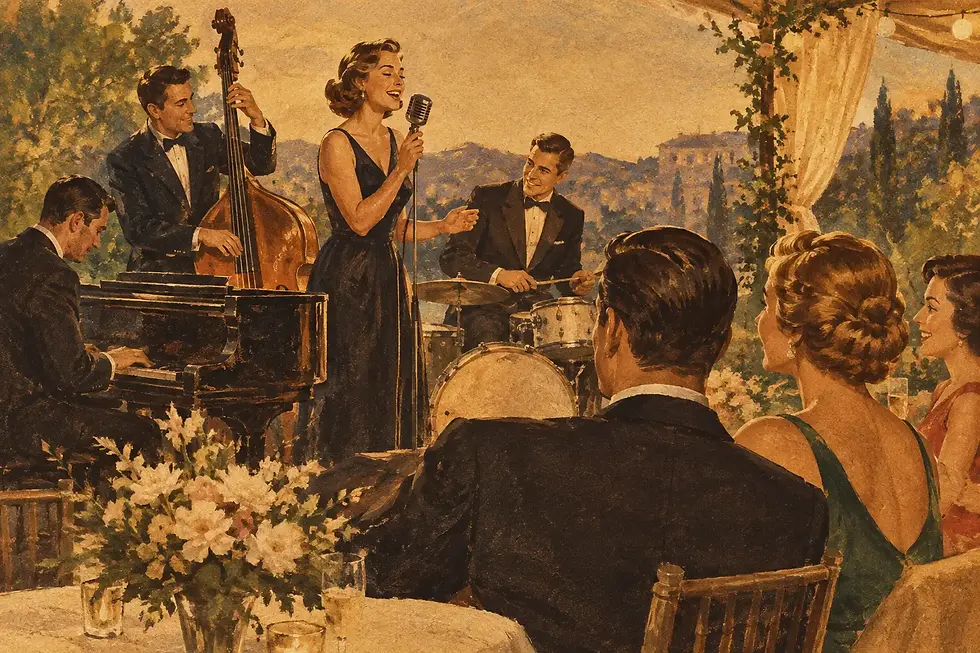
For weddings, private parties, corporate events and hospitality settings, a smaller space can actually make live music more effective. Guests are close enough to feel the personality of the performance. Familiar songs land with more warmth. The visual detail of a double bass, piano, drums and exceptional vocals becomes part of the room’s character rather than something happening at the far end of a ballroom.
Can live music fit small venues without taking over?
Yes, provided the band understands events as well as music. A compact venue does not need a lesser experience. It needs an act that can read the room, manage volume intelligently and arrive with a sensible footprint.
The wrong choice is usually not live music itself. It is a band built for a festival stage, complete with oversized amplification, complicated technical requirements and a set list that only has one gear. That can leave guests shouting across dinner or feeling as though the entertainment has become the event rather than enhancing it.
A compact quartet offers a different proposition. It has enough musical depth to sound complete, enough visual presence to create a focal point, and enough flexibility to perform with polish at a background level or lift the energy when the timing is right. This is especially valuable at receptions, where the music should give the room a pulse without blocking conversation.
The best small-venue performance feels effortless. In reality, it comes from careful decisions made well before the first note.
Start with the room, not the band
When planning entertainment, it is tempting to ask only how many musicians will be performing. Space matters, but it is not the only question. Consider where guests will stand, how service will move through the room, where doors and fire exits sit, and whether the performance area will be visible without creating a bottleneck.
A band does not require a raised stage to make an impression. A cleared corner, an alcove, the end of a reception room or a space beside a feature wall can work beautifully. What matters is giving the musicians a defined area, rather than placing them in the middle of guest traffic. The performance then looks intentional, photographs well and allows everyone to relax.
Ceiling height also changes the feel of live music. Lower ceilings can make sound feel fuller, which is lovely for a jazz-inflected arrangement or soulful vocal, but it calls for restraint. Hard floors, glass walls and bare brick can add plenty of character while reflecting sound around the room. Soft furnishings, curtains and a thoughtful sound check help keep that character from becoming a problem.
It is worth sharing a few simple details with your act early: approximate room dimensions, guest numbers, floor plan, access route, parking arrangements and any venue sound restrictions. A professional band will use this information to plan a setup that works rather than arriving with assumptions.
The footprint should feel considered
Compact does not mean cramped. Musicians need enough room to perform comfortably, protect instruments and move safely. A double bass, for instance, brings enormous visual and musical value but needs a sensible place to stand. Drums and piano should be positioned so the players can communicate easily, while cables must be kept tidy and away from guest routes.
A well-planned quartet setup can feel like a feature of the styling: elegant instruments, smart presentation and a confident performance space. It adds atmosphere without asking the venue to become a concert hall.
Volume is part of the performance
For many hosts, volume is the real concern. They want a memorable live moment, not complaints from the next table or a venue manager watching the sound meter. That concern is reasonable, and it is why musical judgement matters as much as equipment.
A skilled live act does not play every song at maximum level. They shape the evening. During arrivals and drinks, lighter arrangements and lower dynamics give guests room to talk. As the room settles, the band can bring more rhythmic lift and vocal presence. Later, when attention naturally turns towards the entertainment, the performance can become more featured without feeling abrupt.
This is where acoustic-led instrumentation has a real advantage. Double bass, piano, restrained drums and vocals can create a rich sound without the hard edge of an over-amplified setup. Amplification is still useful in many rooms, particularly for vocals, but it should support the music rather than dominate it.
Ask prospective entertainers how they handle sound limits. A confident answer will cover more than turning things down. It should reflect experience with room acoustics, set pacing, drum control, compact equipment and communication with venue staff. If a venue has a decibel limit, confirm it in advance. There is no glamour in discovering a restriction ten minutes before guests arrive.
Choose music that works at close range
Small rooms reward personality. Guests can see expressions, hear lyrical details and notice the interplay between musicians. That makes curated arrangements far more compelling than a generic playlist delivered at full throttle.
Recognisable songs are still the strongest social currency. They give guests an instant connection, even when the arrangement is unexpected. A modern pop favourite recast with a vintage swing, a soulful 1990s classic or an 1980s anthem given a jazzier groove can make people smile before they have quite worked out why they know it.
That is the appeal of new tunes, old-style. It feels familiar but not predictable, polished but never stiff. For an audience spanning colleagues, family and friends, the repertoire can bridge generations without becoming a musical compromise.
The timing of those songs matters, too. A stylish brunch may suit warm soul, bluesy pop and light jazz textures. A corporate drinks reception may call for confident, sophisticated energy that lets people network easily. A wedding can begin with elegant background music and build towards the songs that pull people closer to the performance. One room can serve several moods across an evening when the musicians know how to pace it.
The practical questions worth asking
Before booking, ask how much performance space the band ideally needs, whether they bring their own compact sound system and how long setup takes. Confirm the available power supply and whether load-in involves stairs, narrow corridors or a long walk from the car park. These practical details are not glamorous, but they protect the polished result you are paying for.
You should also discuss the event timetable. Live music has greater impact when it is placed around the natural rhythm of the occasion. At a reception, this may mean playing as guests arrive and during the first hour of mingling. For dinner, it may mean short sets between courses. At a party, it may mean holding back the highest-energy material until the room is ready for it.
If space is exceptionally tight, ask whether the act can tailor its format. Fewer players may suit some rooms, although there is a trade-off: a quartet offers a fuller visual and musical statement. Equally, a band may be able to position part of its equipment differently or use a lighter production approach. The answer depends on the venue, the guest count and the role music needs to play.
Small venue, strong impression
The most memorable intimate events are rarely the ones with the most equipment. They are the ones where every detail feels deliberate: lighting that flatters the room, a bar that flows, guests who can hear one another, and music that gives the occasion its own character.
Vintage Boombox is built for precisely that balance. With powerhouse vocals, piano, double bass and drums, the quartet brings a proper live-band presence to spaces that do not need a sprawling stage. The result is refined entertainment with enough energy to turn a room, not overwhelm it.
A small venue should never force you into settling for background playlists or a lesser atmosphere. Give the music a thoughtful home, choose performers who understand the demands of live events, and let the room do what intimate spaces do best: make every great song feel closer.


Comments