
DJ or Live Quartet? Choose the Right Event Sound

A DJ or live quartet can both fill a room, but they create very different reasons for guests to stay in it. One brings instant recognition and a vast catalogue. The other brings a visual centrepiece, a human connection and the kind of atmosphere people remember long after the last glass has been cleared.
For weddings, corporate functions and stylish private parties, the right choice is rarely about which format is objectively better. It is about what the event needs to feel like. Are you building a sophisticated drinks reception where conversation matters? Do you need a high-energy late-night dancefloor? Or do you want familiar songs to sound fresh, characterful and properly at home in the room?
DJ or live quartet: start with the atmosphere
A DJ is brilliant at momentum. With thousands of tracks at their fingertips, they can move from disco to house, Motown to modern pop, and react quickly when the dancefloor tells them what it wants. For a party built around dancing until late, that flexibility is hard to beat.
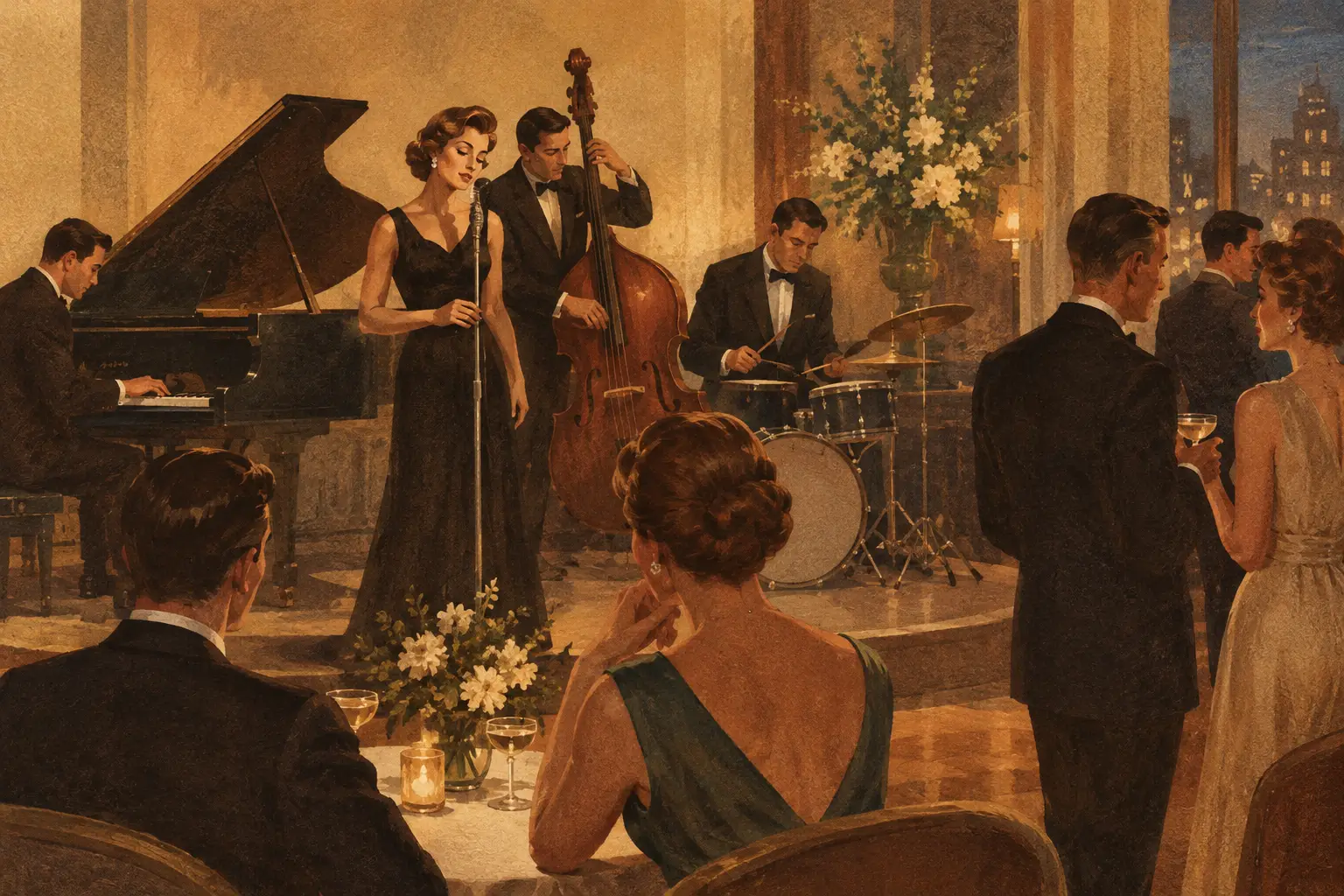
A live quartet changes the atmosphere before the first song has finished. Guests see the double bass, drums, piano and vocalist. They hear the lift of a real groove rather than a track starting through the PA. It feels curated, present and a little more special, particularly in venues where the setting already has character: a gallery, hotel ballroom, garden marquee, private dining room or elegant townhouse reception.
The key distinction is not simply live versus recorded. It is the emotional temperature of the event. A DJ can make the room feel like a club. A quartet can make it feel like an occasion.
That does not mean live music must be restrained. The right band can raise the tempo, bring guests towards the dancefloor and deliver the singalong moments everyone hopes for. But it does so with personality. A modern pop favourite recast with swinging piano, double bass and powerhouse vocals has a different kind of pull. It feels recognisable, but never predictable.
The room matters as much as the playlist
Event entertainment has to work in the real world, not just on a spreadsheet. Consider the room, the guest count, timings, access and how closely tables sit to the performance area.
A DJ often needs comparatively little physical space, although speakers, decks, lighting and a booth still need planning. Their setup can suit a late party in a separate room, particularly where a strong sound system is already in place. They are also a practical choice when a venue has limited load-in time and the evening needs music across many genres.
A quartet may be more compact than people expect. Four experienced musicians can create a full, luxurious sound without the footprint of a large function band. That makes a live quartet particularly effective for drinks receptions, networking events, brunches and dinners where the entertainment must enhance the room rather than dominate it.
Volume is worth discussing early. A good live act understands the difference between background music and a feature set. During arrivals and drinks, guests should be able to talk without leaning across the table. Later, when the speeches are done or the dessert plates are cleared, the same group can step forward and give the room more energy. That controlled shift is part of the value of experienced event performers.
Choose a DJ when variety is the priority
There are events where a DJ is the most sensible choice. If your crowd spans several generations and you want requests from every corner of pop history, a DJ offers extraordinary range. If the brief is chart hits, Ibiza classics, garage, R&B and a very late finish, the format fits naturally.
A DJ is also useful when music needs to run almost continuously for hours. There are no performance breaks in the conventional sense, and transitions can be tailored minute by minute. For a large party where the dancefloor is the central entertainment, this responsiveness can be exactly what the night needs.
The trade-off is that the room may feel less distinctive before the dancing begins. A DJ can provide excellent background sets, of course, but the visual and musical character depends heavily on the individual performer, their presentation and the production around them. If the brief is simply to keep people dancing, that may not matter. If the brief is to make a brand launch, wedding reception or intimate celebration feel designed rather than merely programmed, it may matter a great deal.
Choose a live quartet when character is the priority
A live quartet earns its place when the music is part of the event’s look and feel. It gives guests something to watch as well as hear, without turning the evening into a concert. That is a powerful balance for premium occasions: entertaining enough to create a buzz, polished enough to leave space for conversation, photographs and hospitality.
The repertoire is crucial. A standard covers set can feel familiar in the wrong way. Arrangements are what make a quartet feel considered. Contemporary pop, 1980s anthems and 1990s favourites can take on a new life when they are played with jazz, soul and blues sensibility. The hook remains. The treatment becomes smarter.
This is where Vintage Boombox offers a clear alternative to the usual function-band formula. New tunes, old-style, delivered by a compact quartet with double bass, drums, piano and commanding vocals. The result is music guests know, reimagined with vintage confidence for a room that deserves more than background noise.
For corporate hosts, that difference can support the whole event. Live music at arrival sets a warm tone before the first conversation begins. It can soften a formal venue, elevate a drinks reception and give a launch or awards evening a sense of occasion without demanding all the attention. For wedding couples, it can bridge the gap between the ceremony’s elegance and the evening’s celebration.
Think in moments, not just running times
The strongest entertainment plans match music to the rhythm of the day. Guests arriving at a corporate reception need something welcoming and buoyant. A wedding drinks reception needs lift while photographs happen and family groups reconnect. A dinner may call for warmth and style at a lower level. The post-dinner set can then bring the release.
A quartet is especially good at these transitions because it can be present without being intrusive. It provides a focal point during quieter moments, then turns up the pace when the room is ready. A DJ can do this too, but the effect is different: one builds a soundtrack, the other performs the occasion as it unfolds.
You do not necessarily have to choose only one. For longer events, a live quartet for arrivals, drinks and an early feature set can work beautifully alongside a DJ for the late-night party. Guests get the elegance and theatre of live performance, followed by the all-hours flexibility of a DJ. It is a considered combination, although it does require a realistic entertainment budget, clear handover timings and agreement on sound equipment.
If you are selecting one format, be honest about your priority. Do you want the broadest possible run of original tracks? A DJ is likely the answer. Do you want familiar music delivered with style, presence and a point of view? Choose the quartet.
Ask the questions that protect the experience
Before booking, ask how the performer approaches volume, set timings and guest interaction. Find out what space and power they require, when they need access, whether they supply their own PA, and how they handle a delayed schedule. These details may sound unglamorous, but they are what keep a polished event feeling polished.
For live music, ask whether the band can adapt the mood across the event rather than delivering one fixed-style set. For a DJ, ask how requests are managed and whether they will work to a do-not-play list. In either case, experience with venues, planners and changing timelines is as valuable as a strong playlist.
The best choice is the one that makes the room feel intentional. Picture your guests arriving, drink in hand, noticing the sound before they have found their table. If that picture calls for polished musicians turning well-loved songs into something unexpectedly stylish, let the live quartet set the scene.


Comments