
How to Time Live Music Sets for Any Event

A beautifully planned event can lose momentum in ten minutes. Guests arrive, collect a drink, find familiar faces and settle into the room at different speeds. The way you time live music sets determines whether that moment feels effortlessly stylish or slightly awkward. Get it right and the music appears to move with the event, lifting the room exactly when it needs it.
For weddings, private parties and corporate occasions, live music is not simply a slot on a running order. It is the thread that joins the arrival, the conversation, the celebration and the big reveal. The best schedule leaves room for real people to mingle, for catering to do its work and for the atmosphere to grow naturally.
Start with the energy, not the clock
A timetable is useful, but it should not be the only thing directing the music. Consider what guests need to feel in each part of the event. A drinks reception may call for warmth, polish and recognisable songs at a conversational level. A post-dinner set can take more musical risks, build the tempo and give people a clear reason to gather near the stage.
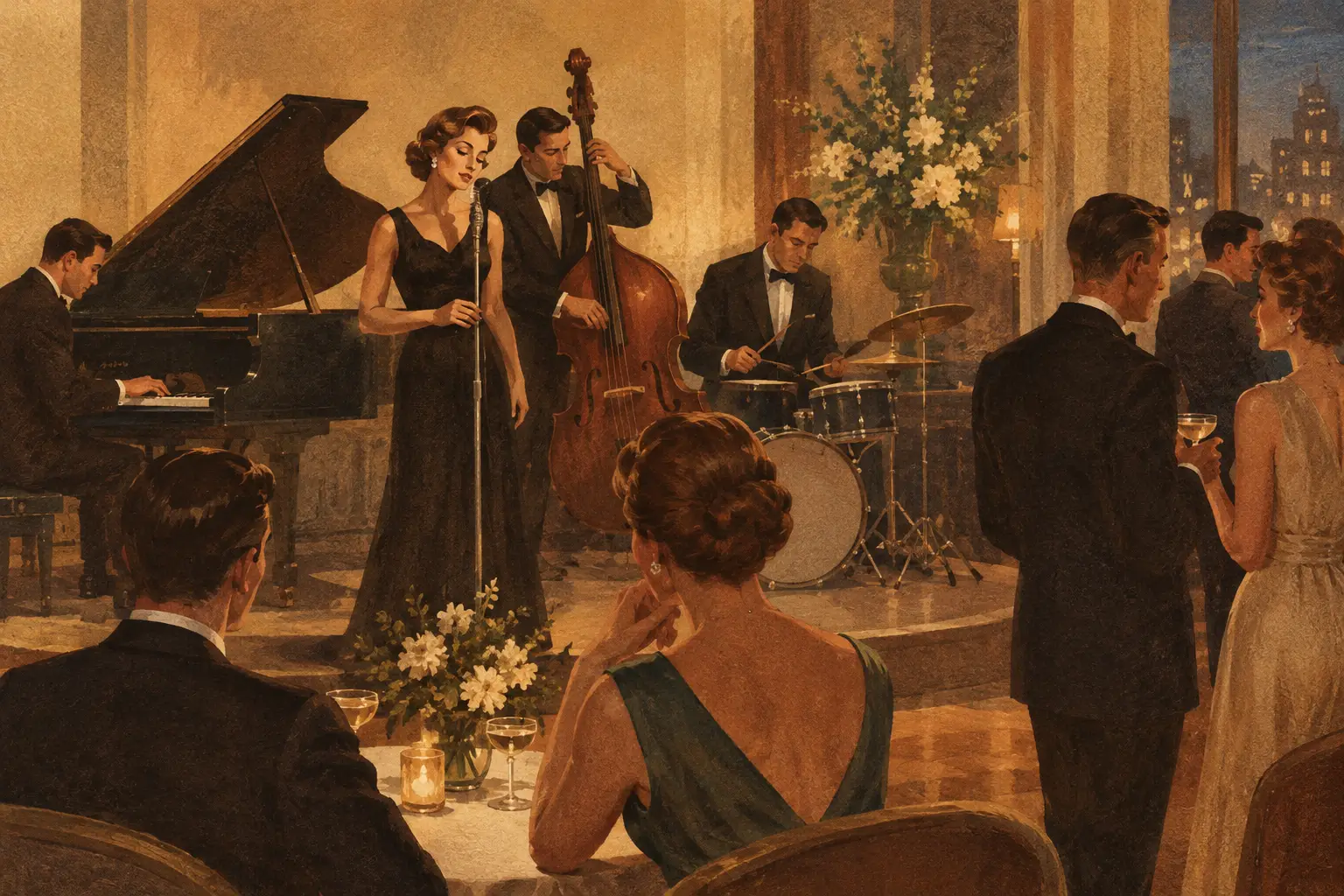
The same band can play both moments, but the sets should not feel identical. That is where a carefully arranged quartet has an advantage. Double bass, drums, piano and vocals can create a sophisticated backdrop without swallowing the room, then shift into a more featured performance when the occasion asks for it.
Ask one simple question at every point in the plan: are guests meant to talk, move, eat, watch or dance? The answer should shape the volume, pace and length of the set.
Time live music sets around the guest journey
The strongest event entertainment follows the guest experience rather than treating music as an isolated performance. Most premium events have three natural musical windows: arrival, transition and celebration.
Arrival: make the first drink feel like an occasion
The first 30 to 60 minutes are rarely the time for the biggest numbers. People are greeting hosts, finding the bar and working out where to go next. Live music should give the room confidence without demanding attention. A stylish arrangement of a familiar pop song does this brilliantly: it is instantly welcoming, but never intrusive.
For a drinks reception, a 60-minute continuous set is often more effective than two shorter bursts. Silence between sets can make an otherwise lively room feel unexpectedly flat, particularly if guests are still arriving. Continuous music keeps the atmosphere intact while allowing the band to establish an elegant presence.
If arrivals are staggered, start the music when the first meaningful group of guests is in the room rather than precisely when doors open. Playing to five people for twenty minutes may make less sense than beginning once the reception has a little life.
Transitions: protect the moments that can feel empty
The most overlooked parts of an event are the changeovers. Guests moving from ceremony to reception, drinks to dinner, or dinner to a main room need a cue that the next chapter has begun. Music can provide it without an announcement or a fuss.
A shorter 20 to 30-minute live set works well here. It gives people a reason to pause with a drink, prevents a queue forming around one area and creates a sense of anticipation before food, speeches or a featured performance.
This is also when practical planning matters. If the band needs to move between spaces, build that into the schedule. A compact ensemble can work beautifully in a room corner or reception space, but musicians still need a sensible route, a safe performance area and enough time to reset. A polished event should never feel like it is waiting for cables to be moved.
Celebration: give the room a reason to stay
After dinner, speeches or presentations, guests are ready for a change of gear. This is the point for a featured set with a stronger arc: recognisable favourites, sharper grooves and a finish that feels properly celebratory.
A 45 to 60-minute set is usually the sweet spot for a corporate party or wedding evening reception. It is long enough to build momentum, but short enough to leave guests wanting more. For longer events, two 45-minute sets with a break in between can work better than one extended performance. The pause lets guests refresh drinks, speak to people they have not yet seen and return with renewed energy.
The exact choice depends on the crowd. A guest list keen to dance may welcome a later start and a punchier second set. A mixed-age corporate audience may respond better to an earlier feature performance before some guests begin leaving. There is no universal timetable, only a clear understanding of the room.
Build around speeches, service and surprises
Speeches are the biggest timing variable at most events. They overrun. A host adds a few words. A thank-you becomes three thank-yous. The answer is not to schedule the band too tightly around them.
Allow a buffer of at least 15 minutes before a planned live set. This gives catering time to clear plates, allows guests to move naturally and means the band can begin at the right moment rather than halfway through a last-minute announcement. If speeches are expected to be informal, a larger buffer is sensible.
Meal service deserves the same respect. If the kitchen is serving a course, music should support the room rather than compete with staff, conversation and clinking glassware. A softer set can suit a relaxed brunch or a long lunch, but it should be planned with the venue. Some rooms become noisier during service than anyone anticipates.
Also leave room for the unpredictable. A late coach, a rain shower, a delayed ceremony or a guest with a surprise toast can shift the programme. Choose performers who are comfortable reading an event, not simply watching the clock. Vastly experienced musicians understand that a great set delivered fifteen minutes later can be far more effective than one started rigidly on schedule.
Match set length to the format
There is a temptation to book as much music as possible. More is not always better. A refined reception often benefits from one perfectly judged set, while an all-evening celebration needs a more generous musical shape.
For an intimate drinks reception, 60 to 90 minutes of live music may be ideal. For a brunch event, two shorter appearances can punctuate the service without taking over. At a corporate function, consider an arrival set followed by a high-impact post-dinner performance. For weddings, live music can frame the drinks reception, wedding breakfast or evening party, depending on where atmosphere matters most to you.
Think too about what happens between sets. Background playback can keep the energy consistent, but it should complement the band’s style rather than feel like a jarring switch. If live music is the visual and musical centrepiece, the return of the performers should feel like an event in itself.
Give your band the information that changes everything
A band does not need every minute of your planning document. They do need the details that affect how they perform. Share the guest arrival time, the key moments, the likely speech window, the room layout, sound restrictions and who has authority to make decisions on the day.
It helps to nominate one point of contact. Event planners are often busy managing multiple suppliers; a trusted venue coordinator, best person or colleague can tell the musicians when guests are seated, when speeches have finished or when a schedule has moved. This keeps communication calm and avoids the host having to make technical decisions while entertaining.
For a compact live act such as Vintage Boombox, it is also worth discussing placement early. Being visible helps the band feel part of the occasion, but the best spot is not always the largest space. A corner near the bar may suit a reception; a central stage position may be right for the feature set. Sightlines, power and guest flow all matter.
Let the music breathe
The finest event schedules are not packed to the minute. They create structure, then allow the room to behave like a room. Guests may be deep in conversation when the first set is due. They may be ready to dance earlier than expected. A flexible musical plan gives you options without sacrificing polish.
Choose set times that serve the feeling you want people to remember: the first buzz of arrivals, the lift after a brilliant speech, or the moment familiar songs in a new, old-style arrangement bring the room together. When the timing feels natural, guests will not notice the schedule at all. They will simply remember that the whole event had exactly the right soundtrack.


Comments