
13 Best Corporate Event Entertainment Ideas

A flat room can undo months of event planning in under ten minutes. The right entertainment changes that instantly, setting the pace, shaping the atmosphere and giving guests something to talk about long after the last canapé has gone. If you are looking for the best corporate event entertainment ideas, the real question is not simply what is impressive - it is what suits your audience, your format and the tone you want the event to carry.
Corporate entertainment works best when it feels considered. A product launch needs energy and edge. A drinks reception needs warmth and flow. An awards evening needs timing, polish and a little theatre. The strongest choices do not just fill a slot in the running order. They support the room.
What makes the best corporate event entertainment ideas work
Not every good act is right for every event. The best corporate event entertainment ideas have three things in common. They are easy for guests to engage with, they match the style of the occasion, and they are delivered by professionals who understand the realities of live events.
That last point matters more than many organisers expect. Corporate functions rarely run exactly to schedule. Speeches overrun. Guests arrive in waves. Venues have sound limits. Entertainment that can adapt without losing quality is worth far more than something flashy that only works under perfect conditions.
There is also a balance to strike between impact and intrusion. Some events need a focal-point performance. Others need entertainment that lifts the room without making conversation impossible. Premium entertainment should know the difference.
13 best corporate event entertainment ideas for stylish events
1. Live band for drinks receptions
A live band remains one of the smartest choices for corporate entertaining, especially during arrival drinks, networking and early evening hospitality. It creates instant atmosphere and gives the room a sense of occasion without forcing guests away from conversation.
The key is choosing the right style of band. A compact, polished live act with strong vocals and familiar songs arranged with taste can elevate a room far more effectively than a loud, generic function set. This is where smaller-format live music really earns its place - stylish, characterful and easy to position in anything from a hotel lounge to a gallery space.
2. Roaming acoustic musicians
For venues with unusual layouts or events that move between spaces, roaming musicians can work beautifully. They keep the entertainment close to the guests and bring a sense of spontaneity that static staging sometimes lacks.
That said, it depends on the event profile. Roaming performance suits informal receptions and hospitality settings better than tightly scheduled formal dinners. If your audience is senior, reserved or heavily focused on conversation, a fixed performance area may feel more elegant.
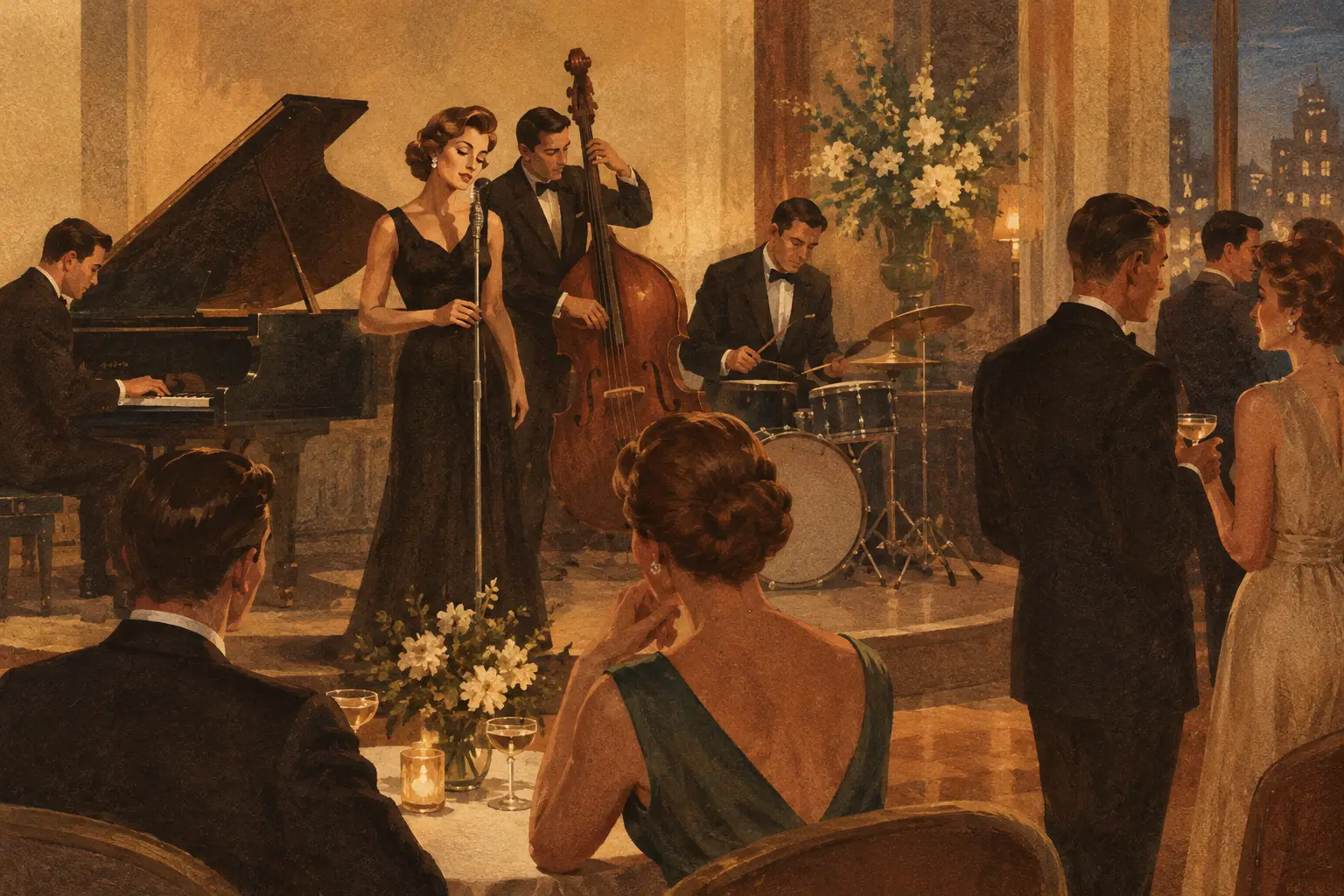
3. Vintage-style live music with a modern setlist
This is a particularly strong option for brands that want entertainment with identity. Familiar songs delivered in a retro style feel fresh without becoming obscure. Guests recognise the material, but the presentation has charm, character and a point of view.
For corporate hosts, this kind of act does two jobs at once. It gives the event musical credibility and a visual personality. It also avoids the tired feel of a standard covers band playing songs exactly as expected. New tunes, old-style has a way of drawing people in.
4. A headline set after dinner
If your event includes dinner, awards or speeches, a featured post-dinner performance can reset the energy in the room. Guests have eaten, formalities are complete and attention can shift from protocol to enjoyment.
This works best when the act can scale. A band that can provide elegant background music early on, then step forward into a stronger featured set later, offers much better value than booking separate entertainment for each moment. Continuity helps the whole evening feel curated rather than pieced together.
5. Jazz, soul or swing ensembles
For premium corporate events, jazz-led entertainment often lands well. It signals quality, it suits smart venues, and it gives guests something enjoyable without demanding that every person in the room become an active participant.
The trade-off is that not all jazz presentation feels accessible. If the repertoire leans too specialist, it can create distance rather than connection. The sweet spot is a set built around soul, jazz, blues and pop influences, where musicianship is high but the song choices still feel welcoming.
6. Interactive music requests
Handled well, guest requests can add energy and make the event feel responsive. This is especially useful where different age groups or departments are mixing, and you want broad recognition across the room.
It only works if the act has enough depth and confidence to manage it gracefully. A rigid setlist can feel flat, but a request-led format with no curation can become chaotic. The best version sits in the middle: flexible, polished and still in control of the atmosphere.
7. DJ and live musician hybrid
A DJ with live vocals, percussion or saxophone can bridge the gap between background and party entertainment. It gives you the continuity and breadth of a DJ set with the added spark of live performance.
This is a good choice for larger corporate parties or end-of-year celebrations where the brief shifts from networking to dancing. For daytime events or elegant receptions, though, a full hybrid set can feel too club-led. Context matters.
8. Casino tables and gaming entertainment
For gala evenings and themed functions, casino tables offer structure as well as entertainment. Guests always know what to do, and the format naturally encourages mixing.
The challenge is tone. Casino entertainment can be lively and sociable, but it does little for atmosphere on its own. It often works best when paired with live music, giving the room both a visual focal point and a broader sense of occasion.
9. Caricaturists and live illustrators
These are strong choices for receptions where guests are circulating and you want entertainment that doubles as a talking point. A live illustrator can also bring a more contemporary, luxury feel than novelty-based acts.
They are not, however, a full-room energy solution. Think of them as an enhancement rather than the main engine of the event. If the room needs momentum, music usually has to lead.
10. Table magicians and close-up performers
Close-up magic remains popular because it is flexible and easy to place around catering, networking and dining. It creates little pockets of surprise and gives guests a direct experience rather than a stage show they simply watch.
It is a practical option for events with mixed confidence levels, as it helps break the ice. Still, if your event brief is more refined than playful, the style of performer makes all the difference. Sophisticated delivery is essential.
11. Silent disco or headphone experiences
For venues with sound restrictions, silent disco formats can solve a real problem. They are also useful where an event has to cater to different music tastes at once.
This is usually better for late-night staff parties than brand-led hospitality events. It is fun, but it can fragment the room visually. If you want a united atmosphere and a more premium feel, live performance tends to carry more presence.
12. Themed performers and immersive characters
Immersive entertainment can be memorable when tied to a genuine event concept. Think launch events, seasonal parties or hospitality evenings with a clear design direction.
The risk is overdoing it. If the theme feels bolted on, guests notice. Corporate audiences are generally more responsive to entertainment that feels intentional and stylish rather than theatrical for its own sake.
13. A compact feature band with visual identity
If there is one option that consistently works across the widest range of corporate settings, it is a compact live band with a defined look, broad repertoire and strong event instincts. Small-footprint entertainment is easier to stage, easier to schedule and often far more adaptable than larger setups.
That is particularly valuable for organisers juggling venue constraints, guest flow and changing run times. A well-drilled quartet with real style can sit neatly in a corner during drinks, lift a dinner set with class, then sharpen the mood for the rest of the evening. Vintage Boombox is built precisely for that brief.
Choosing entertainment to suit the event, not your wish list
One of the most common planning mistakes is booking entertainment based on personal taste alone. Your favourite act may not be the right act for the room. Corporate event entertainment should reflect the guest profile, the venue and the purpose of the gathering.
If the event is client-facing, elegance and polish matter. If it is an internal celebration, familiarity and release may matter more. If the room is all about conversation, volume control and musical shape become critical. The smartest entertainment choices are not always the biggest. They are the ones that make the evening feel easy.
A final thought on the best corporate event entertainment ideas
The most successful corporate events rarely rely on gimmicks. They rely on atmosphere, pacing and a sense that every detail has been chosen with intent. Entertainment is central to that. Pick something with style, flexibility and genuine live presence, and the whole event starts to feel more confident before anyone has even raised a glass.


Comments