Can Live Bands Stay Subtle at Sophisticated Events?

A drinks reception should not feel like a concert with a bar attached. Guests need to greet one another, make introductions, order a drink and settle into the room. That is why planners often ask: can live bands stay subtle without losing the magic that makes live music worth booking?
They can - and the right band can do far more than simply turn down the volume. Subtle live music is about judgement: choosing songs with the right shape, reading the energy in the room, using arrangements that leave space for conversation, and knowing precisely when to step forward. It is a performance skill, not a compromise.
For weddings, corporate gatherings, private dinners and polished hospitality events, this balance can make the difference between a pleasant occasion and one people remember for all the right reasons.
Can live bands stay subtle without becoming background noise?
Yes, provided subtlety is built into the performance rather than treated as an afterthought. A loud party band playing quietly is not automatically an elegant reception act. The instrumentation may still feel too dense, the grooves too forceful and the song choices too demanding of attention.
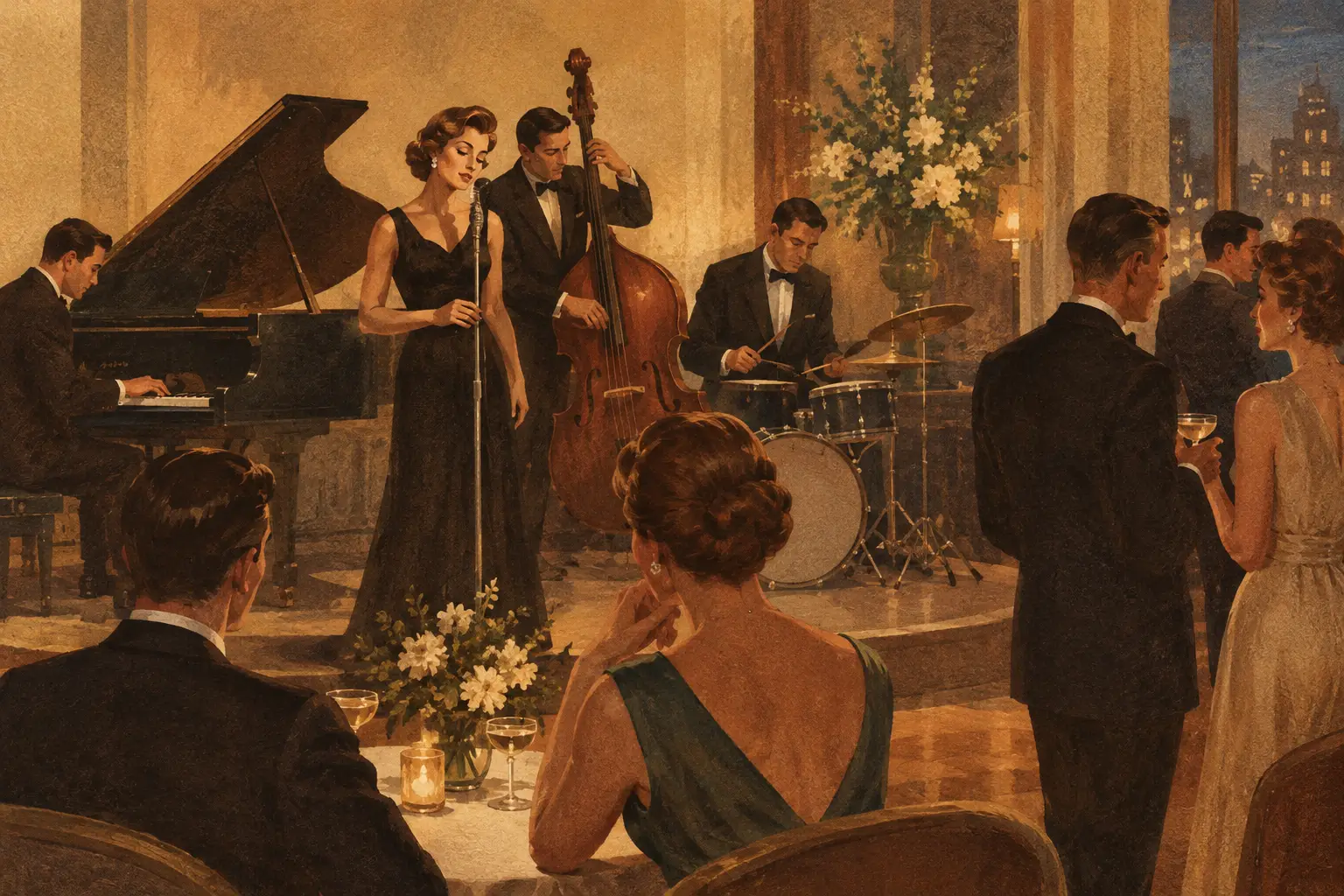
A refined live band creates atmosphere without asking the room to stop and watch. Familiar songs are useful here, but they need considered treatment. A well-known pop chorus recast with double bass, brushed drums, piano and warm vocals can feel inviting rather than intrusive. Guests recognise the tune, enjoy the surprise, then carry on talking.
That is the sweet spot: music with personality, performed at a level that supports the occasion instead of competing with it.
There is also a distinction between being subtle and being forgettable. Silence can make a room feel flat; generic playlists can make it feel anonymous. Live players bring movement, character and a sense that the event has been properly curated. The aim is not to disappear. It is to make the room feel better while remaining entirely in tune with its purpose.
The arrangement matters as much as the volume
Volume is the obvious consideration, especially in venues with neighbouring dining spaces, hotel guests or strict sound policies. But it is only one part of the picture. A band can meet a sensible decibel level and still feel overbearing if the arrangement is too busy.
Compact instrumentation naturally helps. Piano, double bass, restrained drums and vocals offer clarity without filling every inch of the room. There is air around the music. The bass can provide warmth rather than thump, drums can use brushes or lighter sticks, and piano can add colour without the sustained wash of amplified guitars or large brass sections.
Song selection has a similar effect. Not every favourite needs to arrive at full festival energy. A stylish reworking of an 80s or 90s classic can bring instant recognition while keeping the mood relaxed. Soul, jazz, blues and vintage-inspired pop arrangements have a natural social ease: rhythmic enough to lift the atmosphere, but flexible enough to sit comfortably under conversation.
This is where experienced musicians earn their place. They know that the same song can feel intimate, playful or explosive depending on tempo, dynamics and phrasing. A great arrangement does not reduce a song. It gives it a new role.
Different moments need different levels of presence
The best event entertainment follows the rhythm of the day. A single fixed volume or mood rarely works from arrival through to the final toast.
Arrival drinks and networking
At a reception, the music should make the room feel alive from the first guest through the door. The performance needs enough presence to signal quality and occasion, yet enough restraint for guests to exchange names and first impressions. Mid-tempo tunes, lighter grooves and relaxed vocals work beautifully here.
For corporate events, this is particularly valuable. Colleagues and clients may be meeting for the first time, and conversation is often the real priority. Live music can remove the awkwardness of a quiet room without creating a barrier between people.
Dining and speeches
During a meal, subtlety becomes more exacting. Service noise, table conversation and speeches all need room. Some events prefer no live performance during the main course; others enjoy short sets around service breaks or between courses. Both approaches can work, depending on the venue layout and the running order.
The important point is that the band should be adaptable. Music that is perfect beside a champagne bar may be too present beside a small dining table. A professional act will respond to the space rather than force every setting into the same show format.
The featured set
Later, the brief may change completely. Once formalities are over, guests often want a stronger musical moment: a featured set, a full dancefloor, or a stylish finale before the evening continues. A versatile quartet can build towards that point without requiring a change of act, a much larger stage or a second production setup.
This is the advantage of choosing musicians with range. You are not booking background music and then separately booking entertainment. You are booking an act that can move with the event.
Small footprint, considered impact
Space is a practical concern at premium events. A lovely private dining room, gallery, terrace or hotel lounge may not have room for a large function band, vast speaker stacks and a tangle of equipment. Nor should it need to.
A compact live band can fit into a corner of the room and still bring real visual character. The setup should look intentional: elegant instruments, tidy staging and performers who suit the setting. This matters more than many organisers realise. Guests notice when the entertainment feels like part of the event design rather than an operational necessity placed beside the fire exit.
A smaller footprint also makes sound easier to manage. With fewer sources on stage, musicians can achieve a balanced, detailed sound at a sensible level. It is a practical benefit, but it also shapes the guest experience. People can hear the music clearly without raising their voices all evening.
Vintage Boombox is built around that idea: new tunes, old-style, delivered by a compact quartet with the confidence to keep things elegant or turn up the celebration when the room is ready.
What to tell your band before the event
The easiest way to get subtle live music right is to be clear about the function it needs to serve. A good booking conversation should cover the event schedule, guest numbers, venue dimensions and whether the performance is intended to be atmospheric, featured or both.
It also helps to describe the room in human terms. Is it a lively launch party where guests will circulate? A wedding breakfast in a country house? A client dinner where conversation is central? A birthday reception where the host wants a little glamour before everyone heads to the dancefloor? Those details guide far better choices than simply asking for 'something chilled'.
Discuss sound restrictions early, but do not assume they mean the music will feel flat. A considerate band can work within a venue policy while maintaining warmth and groove. If speeches are planned, agree whether the musicians will pause, play guests into the room, or provide gentle music as people return to their tables.
Finally, ask about the transition later in the evening. If you may want the band to become more prominent, make that part of the plan from the start. The most effective performances feel natural because the shift in energy has been carefully anticipated.
Subtle should still feel special
There is a persistent idea that live music must choose between polite background sound and all-out party mode. The strongest event bands prove otherwise. They understand dynamics. They create a gorgeous atmosphere at 6pm, hold the room with a recognisable favourite at 7pm, and can bring genuine celebration when the timing is right.
That range is especially valuable for hosts who care about the whole guest journey. The music can give an arrival its sparkle, make a room feel more generous during drinks, and provide a talking point without taking over the conversation. Later, it can become the moment everyone films, sings along to and remembers on the journey home.
When you are planning your event, think less about whether the band will be loud or quiet, and more about whether they will understand the room. The right musicians know that tasteful restraint is not a smaller performance. It is a brilliantly judged one.


Comments