
A Guide to Vintage Style Covers for Events

A brilliant event soundtrack does more than fill the silence between speeches and champagne pours. It sets the pace of the room. The right version of a recognisable song can make a drinks reception feel instantly more considered, give a corporate gathering real personality, or turn a wedding breakfast into the part guests keep talking about. This guide to vintage style covers explains why old-school arrangements of modern favourites are such a strong choice for events that call for both atmosphere and impact.
What are vintage style covers?
Vintage style covers take songs guests already know and rework them through the musical language of an earlier era. Rather than reproducing a pop record note for note, the arrangement might borrow the swing of a jazz club, the warmth of classic soul, the grit of blues or the effortless cool of a mid-century cocktail bar.
A well-made vintage cover is not a novelty costume placed over a familiar chorus. It is an arrangement with purpose. The melody remains recognisable, but the rhythm, harmony, tempo and instrumentation create a completely different setting for it. A 1990s dance anthem can become a smoky soul number. An 1980s pop classic can take on a jump-jazz groove. A current chart hit can sound as though it has been waiting for a double bass and piano all along.
For guests, that combination is immediate and pleasing: they know the song, yet they hear it afresh. For hosts, it offers a more polished alternative to the standard function-band set.
Why vintage style covers work so well at events
Event music has a difficult job. It needs to be engaging without demanding constant attention, sophisticated without becoming background-only, and versatile enough to suit guests with different tastes. Vintage arrangements are particularly good at holding that balance.
The familiar hook gives people an easy point of connection. Even guests who would not describe themselves as jazz, soul or blues fans can enjoy the surprise of recognising a favourite song in a new setting. Meanwhile, the vintage treatment adds character without forcing an overly themed event. It feels curated rather than gimmicky.
This is especially valuable at receptions. A playlist can provide sound, but live musicians bring timing, energy and visual presence. A compact quartet can read the room, lift the tempo as conversations warm up, and keep the performance at a level that supports networking, dining and celebration rather than competing with it.
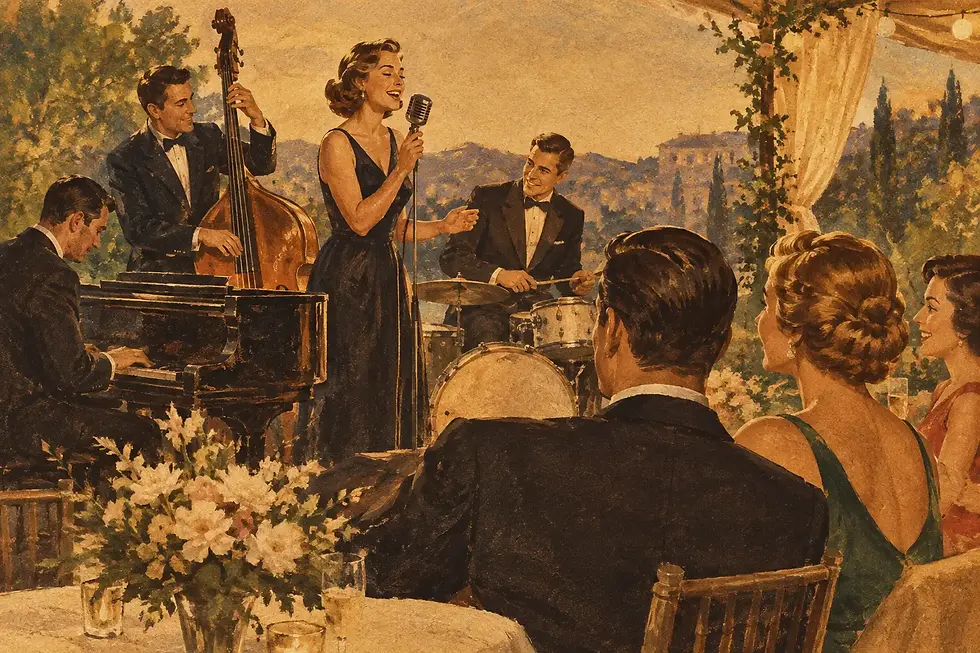
There is also a practical advantage. Vintage arrangements often make a small band sound beautifully full without needing a large stage or a vast production footprint. Double bass, drums, piano and vocals offer rhythm, warmth, colour and personality in a format that can work in an elegant room corner as comfortably as it can on a main stage.
The difference between a vintage arrangement and a themed act
A vintage aesthetic can mean very different things. Some acts lean heavily into a particular decade, complete with costumes, character performance and strict period repertoire. That can be exactly right for a themed party, but it is not always the best fit for a premium wedding or corporate event where the brief is stylish rather than theatrical.
Vintage style covers are more flexible. The look and sound nod to a bygone era, but the music can travel across decades. Your guests may hear an 80s singalong, a 90s favourite and contemporary pop, all tied together by one distinctive musical identity. The result is cohesive without becoming predictable.
That distinction matters when planning an event with a broad guest list. A full tribute set can delight a particular crowd, whereas familiar songs arranged with jazz, soul and blues influences tend to invite more people in. The best repertoire feels inclusive, not niche.
Choosing the right vintage cover band
When comparing acts, start with the experience you want guests to have, not simply the number of musicians on stage. A larger band is not automatically a better band for a drinks reception. In some spaces, a tight, highly skilled quartet will create more atmosphere than a louder ensemble that dominates every conversation.
Listen for arrangement quality. Are the songs genuinely reimagined, or simply performed at a slower tempo with a retro vocal effect? Strong arrangements have shape. They know when to leave space, when to build a groove and when to let a memorable lyric land. The musicians should sound comfortable in the style, not as though they are visiting it for the evening.
It is also worth considering the lead vocal. Vintage arrangements need a singer who can carry the personality of the song while making it their own. Power matters for featured moments, but control and phrasing matter just as much during a refined reception set.
Ask practical questions early. How much space does the act need? Can they provide music for different parts of the day? What are their set lengths and break arrangements? Are they experienced with venue timings, sound limiters and quick turnarounds? Premium live entertainment should feel easy to book as well as impressive to hear.
Match the set to the moment
The same band can create very different moods depending on the repertoire and performance format. For arrival drinks, relaxed swing, soulful pop and upbeat mid-tempo numbers keep the room buoyant while allowing guests to talk. During dinner, a more restrained set can add warmth without interrupting service or speeches.
Later in the evening, the energy can rise. This is where a band’s ability to turn recognisable floor-fillers into vintage-styled showpieces becomes invaluable. Guests get the pleasure of familiar choruses, but the sound still belongs to the event rather than to a generic party playlist.
For a wedding, this might mean elegant music for the afternoon followed by a more celebratory performance after the formalities. For a corporate event, it may mean a polished reception set that develops into a featured entertainment slot. The right approach depends on the room, the running order and whether the music is there to frame the occasion or become one of its headline moments.
Repertoire: familiar, but never obvious
The strongest vintage cover sets are built around recognition and contrast. A run of songs from one decade can feel narrow, even when every choice is a classic. A wider selection gives the performance more movement and helps different generations find their moment.
That does not mean every song needs to be a huge anthem. In fact, a good set benefits from variety: a stylish opener, a few knowing surprises, songs that invite a gentle singalong, and a handful of undeniable crowd-pleasers for when the room is ready. The key is pacing.
Be realistic about requests, too. Most professional acts will be happy to discuss the mood you want and may be able to include a meaningful song where timing allows. But a carefully built repertoire is often stronger than an evening shaped entirely by individual requests. You are booking a musical point of view, not just a live jukebox.
Style should support the room
Vintage styling works best when it complements the event rather than competing with it. At a black-tie awards dinner, the band might bring glamour, poise and a touch of old-school sparkle. At a garden wedding, the same musical palette can feel relaxed, sunny and effortlessly sociable. At a brand launch, it can turn a familiar pop reference into something distinctive enough to reinforce the creative brief.
Think about sightlines as well as sound. A compact setup is useful in venues where space is precious, but it also helps the musicians feel part of the event rather than separated from it. Guests can see the performance, feel its energy and still move freely around the room.
This is where experienced event musicians make the difference. They understand that a set is not delivered in isolation. It sits alongside catering, speeches, guest arrivals, photography, production schedules and the natural rhythm of the occasion. Professionalism is not just arriving with excellent instruments. It is knowing when to make an entrance, when to hold back and how to make the whole event feel more assured.
A polished alternative to the predictable
For hosts who want music with genuine personality, vintage style covers offer a compelling middle ground. They are more memorable than background jazz, more refined than a conventional party band and more flexible than a strict tribute act. You can have songs people love without hearing them in the same way they have heard them a hundred times before.
Vintage Boombox brings that idea to life with new tunes, old-style: powerhouse vocals, piano, double bass and drums shaping contemporary and nostalgic favourites into stylish live moments. The result is music that can sit beautifully beneath a champagne reception, then step forward when the room is ready for something bigger.
Choose songs your guests will recognise, arrangements with real character and performers who understand the occasion. When the last chorus lands, the room should feel less like it has heard a cover band and more like it has been part of a properly memorable performance.


Comments