
How Live Music Shapes Atmosphere at Events

The first few minutes of a drinks reception set the social temperature for everything that follows. Guests arrive from different places, make introductions, find a glass, assess the room and decide whether the occasion feels formal, relaxed or properly special. This is exactly how live music shapes atmosphere: it gives a room a pulse before anyone has found the dance floor.
A considered live set does more than fill silence. It frames conversation, softens the practical edges of an event and gives guests a shared point of reference. The right song, delivered in the right style and at the right volume, can make a grand venue feel welcoming or a smaller room feel beautifully composed.
For weddings, corporate functions, private celebrations and hospitality events, that distinction matters. Entertainment is not simply an item on the running order. It is part of the design of the occasion.
How live music shapes atmosphere from the first note
Recorded music can create a mood, but a live performance responds to one. Musicians can read the pace of arrivals, the character of the crowd and the acoustics of the room. They can let an arrangement breathe while guests are greeting one another, then lift the tempo when the conversation has found its flow.
That responsiveness is especially valuable at events with several moving parts. A wedding reception may need warmth while photographs are being taken. A corporate drinks event may call for polish without making discussion difficult. A milestone birthday might begin with elegant background music before turning into a full-hearted singalong later in the evening.
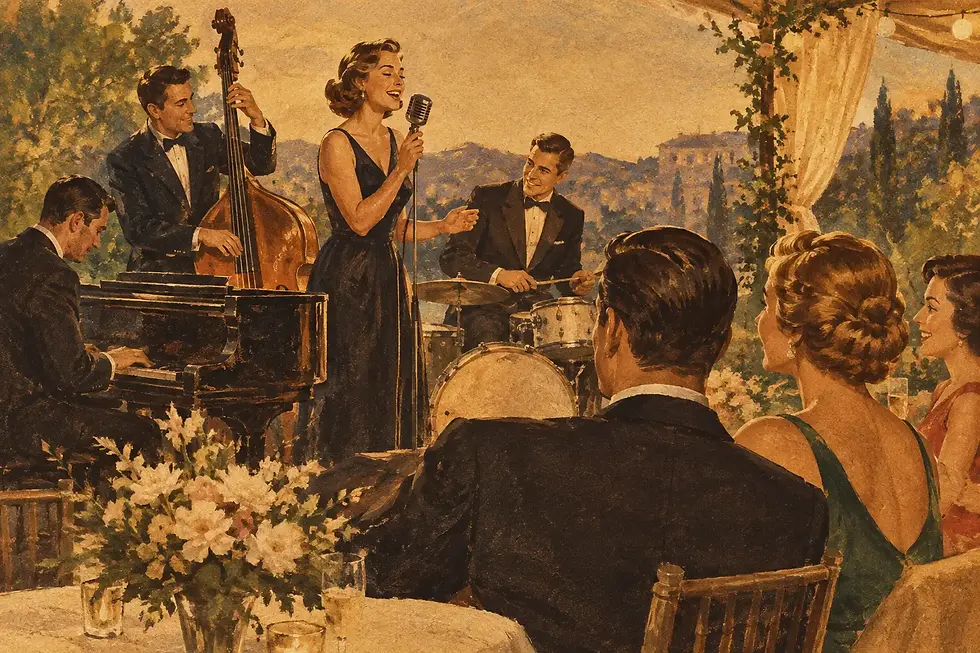
Live music also creates a sense of occasion because it is visibly happening in the room. The movement of a double bass player, the snap of a brushed drum rhythm, the piano chords beneath a familiar melody and a great vocalist owning the lyric all give guests something real to connect with. It feels hosted rather than merely supplied.
The effect is subtle when it needs to be. A compact quartet in the corner can make the room feel alive without demanding attention every second. When the moment calls for it, that same group can become the focal point and deliver a set that brings people together. Good event music knows the difference.
Familiar songs, fresh emotional effect
Recognition is one of the quickest routes to connection. When guests hear a song they know, they bring their own memories to it: a first dance, a favourite night out, a long car journey, a song that belonged to a particular decade. That shared recognition often starts a conversation before the chorus is over.
Yet the most effective events rarely need the original recording played exactly as expected. A contemporary pop hit recast with vintage piano, double bass, drums and soulful vocals has a different social function. It is familiar enough to feel inclusive, but distinctive enough to reward listening. The room gets the pleasure of recognition without the predictability of a standard playlist.
This is where arrangement becomes part of the atmosphere. A laid-back jazz-inflected take on an 80s classic can bring sophistication to a champagne reception. A bluesy version of a 90s anthem can add character to a private party. Later, a more energetic interpretation can move the same crowd towards the dance floor without making the change feel abrupt.
There is a practical benefit, too. A broad repertoire helps mixed-age rooms feel considered. The best event music does not divide guests into those who know every current hit and those who would rather hear something from their own era. It creates overlap. A stylish old-school arrangement of a new tune can appeal to both.
Volume is part of the performance
One of the most common mistakes in event planning is treating all live music as either background entertainment or a headline show. In reality, a successful booking often needs to do both at different points in the day.
At a reception, guests should not have to lean across a table to be heard. Music needs presence, not dominance. The performance should add warmth and rhythm to the room while leaving space for introductions, business conversations and the easy chat that makes an event feel sociable.
Later, the brief may change. After dinner, speeches or an awards presentation, the room can handle more energy. The band can build the set, make the hooks more prominent and invite guests to stop watching from the edges. Because the musicians are live, that shift can be judged in the moment rather than fixed in advance.
The venue matters here. High ceilings, hard floors, glass walls and large guest numbers all affect sound. So do intimate dining rooms, courtyard receptions and spaces with strict sound limits. Experienced performers plan for those realities, using a compact, controlled setup and clear communication with planners and venues. Stylish entertainment should never create an operational headache.
Background does not mean forgettable
There is a difference between music that sits politely in the background and music that disappears altogether. The former supports the event. The latter may as well be absent.
A memorable reception set has texture and personality, even at a conversational level. Guests may not pause every discussion to applaud, but they notice the lift it gives the room. They remember that the event felt easy, warm and a little more glamorous than expected. Often, they remember the song that made them smile on arrival.
Music gives an event its own identity
Catering, flowers, lighting and venue styling all influence an event's character. Live music ties those elements together because it is experienced over time. It accompanies the arrivals, bridges the transitions and gives the evening a sound that belongs specifically to that gathering.
For a corporate event, that can mean presenting a confident, considered brand experience. A polished quartet suggests attention to detail without feeling stiff. It gives clients and colleagues an environment that feels premium, while recognisable songs keep the atmosphere approachable.
For a wedding, music can make the gap between ceremony and celebration feel intentional rather than logistical. Guests are not simply waiting for the next instruction. They are enjoying a live moment together. The couple has set a tone: relaxed, stylish and full of character.
For private parties, the effect is even more personal. A live arrangement can turn a favourite song into part of the host's story. It signals that the evening has been curated, not assembled at the last minute.
The trade-off: energy versus elegance
More volume and more tempo do not automatically mean more atmosphere. At the wrong time, they can make a sophisticated event feel pushy. Equally, music that remains too restrained for too long can leave a party without a release point.
The answer depends on the guest list, venue, event timetable and desired finish. A daytime brunch may suit bright, buoyant tunes with a lighter touch. A formal awards dinner might need elegant arrival music followed by a focused post-dinner set. A wedding with a dance-led evening can build gradually from soulful reception numbers to irresistible party favourites.
This is why a useful music brief is about feeling as much as genre. Rather than asking only for jazz, pop or soul, describe how guests should feel when they walk in, when they settle and when it is time to celebrate. A vastly experienced event band can translate that into pace, repertoire and performance style.
Small footprint, full-room impact
A large stage production is not the only route to a big impression. For many venues, a compact live lineup is the smarter choice. It preserves room for guests, service and styling while still delivering the visual appeal of real musicians at work.
A quartet built around piano, double bass, drums and powerhouse vocals has enough colour to feel complete, yet can sit comfortably in a reception space or intimate venue corner. It can also hold a main stage when the event requires a feature performance. That flexibility is valuable for planners balancing atmosphere with floorplans, access and schedules.
Vintage Boombox brings this approach to life with new tunes, old-style: recognisable songs reshaped into elegant, characterful performances that work as beautifully over drinks as they do in front of a ready-to-party crowd.
Make the music part of the plan
The strongest results come when entertainment is discussed early, alongside the schedule and room layout. Consider where guests will first hear the band, whether there are key moments worth underscoring, and how the performance should develop across the event. Share venue details, audience mix and any sound restrictions well before the day.
Then leave space for musicians to do what good live performers do best: read the room. A carefully chosen setlist is essential, but the magic comes from knowing when to hold back, when to lift the groove and when to play the song that makes a room feel as though it has finally arrived.
Choose music that does not merely accompany your event. Choose music that gives guests a reason to remember how it felt.


Comments