
How a Soul and Blues Wedding Band Sets the Tone

The moment after the ceremony matters. Guests are finding their way to the drinks, hugs are being exchanged, photographs are beginning, and the room needs a mood before anyone has reached for the dancefloor. A soul and blues wedding band brings warmth, rhythm and real personality to that moment, giving the day a soundtrack that feels considered rather than simply switched on.
For couples who want familiar music with more character than a standard function set, soul and blues offers a particularly stylish route. It can be intimate without fading into the background, celebratory without swallowing conversation, and versatile enough to carry a wedding from first arrival to the final encore.
Why soul and blues works so well at weddings
Soul has feeling built into it. The best songs have a natural sense of occasion: a soaring vocal, a groove that draws people in, and melodies recognised by grandparents, friends and colleagues alike. Blues brings texture and looseness, making a performance feel live, human and a little less predictable.
That combination is ideal for a wedding because the day has more than one atmosphere. You may want something tender during the ceremony, elegant and sociable for the drinks reception, then properly uplifting once evening guests arrive. A good band can read those shifts and shape the energy accordingly.
There is also a welcome middle ground to it. A soulful rendition of a well-known pop song can feel special enough for the occasion while still being instantly familiar. Guests do not need to be jazz aficionados to enjoy a great groove, a powerhouse vocal or a brilliant reinterpretation of a song they know by heart.
Choosing a soul and blues wedding band for your day
The right act is not simply the one with the strongest singer or longest song list. It is the one that understands the flow of a wedding and knows when to take the lead, when to support the room and when to turn a good party into a memorable one.
Start by thinking about where live music will make the biggest difference. For many weddings, the drinks reception is the sweet spot. It can otherwise become a slightly fragmented hour of queues, photographs and polite small talk. A compact live band immediately gives guests a focal point and makes the first part of the celebration feel intentional.
For others, the evening is the priority. In that case, ask whether the band can build from sophisticated background soul into a more dance-led set. The difference between music that sounds good and music that gets the room moving often comes down to pacing. A vastly experienced event band knows not to peak too early, and not to spend the first half-hour playing only the songs they personally admire.
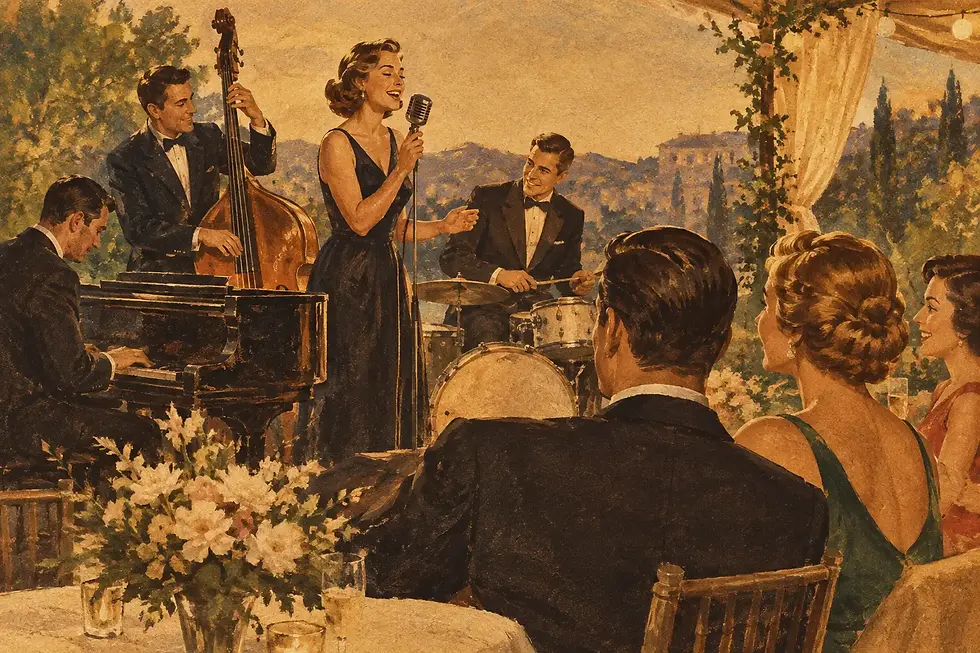
The number of guests, the room layout and the venue's sound restrictions all matter too. A four-piece line-up with vocals, piano, double bass and drums can create a rich, full sound without claiming the entire floorplan. That is a major advantage in country houses, city venues, restaurants and marquees where space is valuable and the band must look as good as it sounds.
The appeal of familiar songs, reimagined
A wedding playlist does not have to choose between classic soul standards and modern crowd-pleasers. In fact, the most distinctive live sets often bring the two together. Contemporary songs recast with vintage swing, bluesy piano or a soulful vocal can surprise guests in all the right ways.
This is where arrangement matters. A song played note-for-note like the original may be recognisable, but it will not necessarily add to the visual and musical identity of the day. A fresh old-school treatment gives a track a new shape. It can turn an 80s anthem into something smoky and stylish, soften a 90s hit for a champagne reception, or give a current pop favourite the kind of groove that works across generations.
Vintage Boombox approaches this with a simple idea: new tunes, old-style. It is a useful way to think about what makes a band feel curated rather than generic. The songs guests love are still there, but presented with a sound and look that belong to the occasion.
Matching the music to each wedding moment
The ceremony calls for restraint. Whether the band plays during guest arrival, the signing of the register or the exit, the performance should support the emotion without competing with it. A beautiful vocal, piano-led arrangement or understated acoustic-feeling set can make these moments more personal than a recorded track.
During the drinks reception, the brief changes. Music should create lift and atmosphere while leaving room for conversation. Soul, blues and jazz-inflected pop work exceptionally well here because they have movement without excessive volume. Guests can relax, catch up and enjoy a glass of something cold while the band makes the whole scene feel more polished.
Dinner is more dependent on your venue and timetable. Some couples prefer no live music while food is served; others want a short, refined set between courses or as the room turns over for the evening. There is no universal answer. What matters is that the band and venue co-ordinate timings so the music adds energy without disrupting service or speeches.
For the evening party, it is time to open things up. The strongest soul and blues wedding bands know how to keep their signature style while delivering the tunes that make people dance. A great vocal, driving rhythm section and a set full of hooks can carry everything from soulful classics to vintage-styled pop, without suddenly becoming a different sort of act.
What to ask before you book
Chemistry is important, but practical questions protect the experience on the day. Ask how much space the band needs, what power requirements they have and how long set-up takes. If your venue has a strict sound limiter or a narrow access route, flag it early. A professional band will have dealt with these realities many times before and can advise on the best format.
It is also worth discussing set lengths and breaks in plain terms. A drinks reception set may only need two 45-minute performances, while an evening celebration may need a longer programme, background playlists between sets and a clear finish time. Make sure everyone understands whether the band is providing music throughout or only during live performance.
Ask about repertoire, but avoid treating the set list as a spreadsheet. The best results come from giving the band a clear sense of your taste, your guests and the feeling you want, then allowing them to use their judgement. You might have a must-play song for the first dance or a particular era you love. Beyond that, an experienced band should have the freedom to respond to the room.
Style is part of the entertainment
A wedding band is not only heard. It is seen in photographs, noticed by guests and remembered as part of the atmosphere. That does not mean every musician needs to wear period costume, but presentation should feel right for the event.
A compact line-up with double bass, piano, drums and standout vocals has an immediate visual pull. It suggests musicianship and gives the performance a sense of occasion before the first note is played. For couples planning a modern wedding with a nod to classic glamour, that visual identity can work beautifully alongside a candlelit dining room, a converted warehouse or a garden reception.
There is a practical benefit too. Smaller bands can be easier to accommodate than larger party line-ups, especially where stages are limited. Small footprint should not mean small impact. With the right arrangements and confident performers, a quartet can fill a room with sound, energy and personality.
The difference experience makes
Weddings rarely run exactly to schedule. Speeches overrun, photographs take longer, weather changes plans and suppliers need to adapt. A band with deep event experience will remain calm, communicate clearly and work with the planner, venue team and other suppliers rather than adding another problem to solve.
That reliability is every bit as valuable as a brilliant performance. You are booking musicians, certainly, but you are also booking people who understand timings, guest dynamics and the importance of getting the atmosphere right at the exact moment it is needed.
Choose music that sounds like you, but also gives your guests something to talk about long after the last song. A soulful groove at sunset, a brilliant vintage twist on a favourite tune and a dancefloor full of every generation is a very good place to leave the night.


Comments