
Hospitality Music Guide for Better Events

A great hospitality music guide starts with one truth: guests remember how a room felt long after they forget the canapé menu. Music sets that feeling quickly. It can make a quiet hotel lounge feel considered, turn a restaurant launch into an occasion, or give a corporate drinks reception the confident buzz it needs before the speeches begin.
The right entertainment does not simply fill silence. It supports the way guests arrive, talk, eat, drink and celebrate. For hospitality teams, planners and venue managers, that means choosing music with the same care given to lighting, service and the first welcome at the door.
Hospitality Music Guide: Start With the Guest Experience
Before choosing a band, playlist or DJ, consider the social purpose of the event. A networking breakfast needs something very different from a rooftop summer party. The question is not simply, “What music do people like?” It is, “What do we want people to do in the room?”
For a drinks reception, the aim is usually easy conversation with a little lift in the air. Guests need to hear one another, order at the bar and settle into the event, while still feeling that something special is happening. Live music with warmth, character and a controlled volume can do this beautifully.
For dinner, music should complement the service rather than compete with it. The room benefits from familiar melodies, elegant rhythm and a set that develops gently as the evening progresses. Once plates are cleared and the formalities are finished, the same musical act may be able to raise the energy for a more featured performance.
This is where versatility matters. Hospitality is rarely one mood from start to finish. A polished act should read the room and understand that the sound required at 6.30pm is not necessarily the sound required at 10pm.
Choose Atmosphere Before Genre
It is tempting to begin with a genre label: jazz, soul, pop, acoustic, swing or party classics. These labels are useful, but atmosphere is the better starting point. Two jazz acts can create entirely different experiences. One may suit a hushed fine-dining room; another may bring the sparkle and rhythm needed for a busy awards reception.
Think in terms of adjectives. Is the brief stylish, relaxed, glamorous, playful, celebratory or high-energy? Is the venue a modern city bar, country house, gallery, hotel ballroom or private dining room? A strong entertainment choice should look and sound at home in that setting.
Familiar music is often the most effective choice, particularly for mixed-age audiences. The advantage is instant connection. Guests recognise a favourite song, but an inventive arrangement gives it a fresh setting and prevents the music from feeling predictable. Contemporary pop played with vintage flair can feel more distinctive than a standard covers set, particularly in a premium venue.
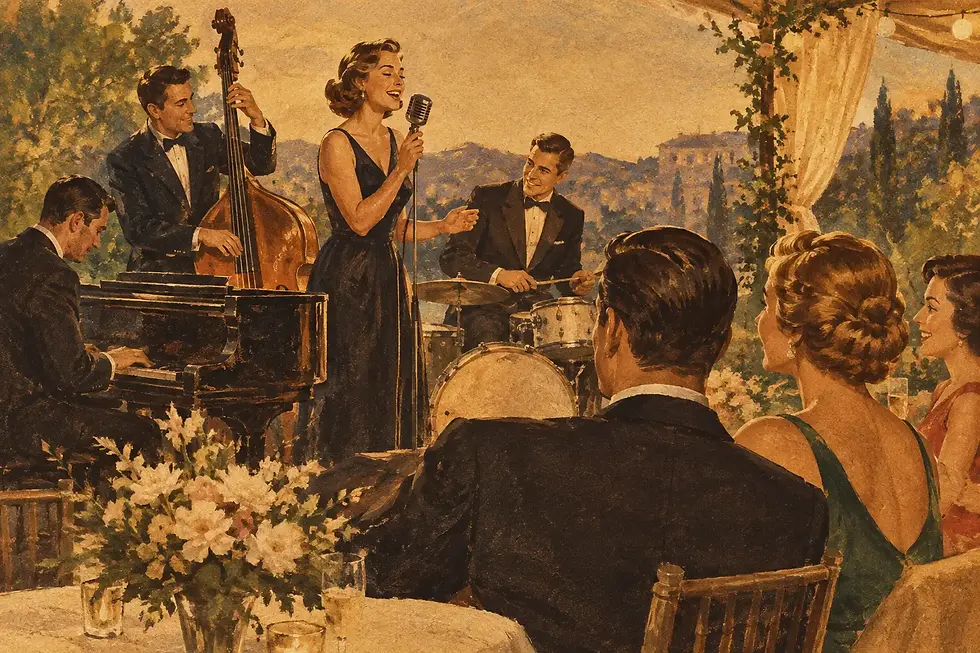
Vintage Boombox approaches this space with its New Tunes, Old-Style sound: recognisable songs recast through piano, double bass, drums and powerhouse vocals. It is a useful example of how an act can offer broad appeal without sacrificing personality.
Familiarity Should Not Mean Formula
A hospitality playlist built entirely from background standards may be safe, but it can disappear into the wallpaper. Equally, a set packed with big singalongs from the first song can exhaust the room before the event has found its rhythm.
The sweet spot is a programme with shape. Early selections should invite guests in. Mid-event music can gain colour and groove as the room fills. Later, when the timing is right, the band can bring more pace, bigger hooks and a little more theatre. This is not about forcing a party. It is about giving one the chance to happen naturally.
Match the Music to the Space
The practical side of a hospitality music guide matters just as much as the song choice. An impressive band in the wrong format can create unnecessary pressure for the venue team. A huge production in a tight private dining room may dominate the space. A tiny acoustic setup in a large ballroom can feel lost.
A compact live band is often an excellent answer for hospitality events. It gives guests the authenticity and visual appeal of a real performance, without demanding a vast stage or turning the venue into a concert hall. Piano, double bass, drums and vocals offer a full sound with a refined footprint, making the format particularly suited to drinks receptions, brunches, launches and corporate entertaining.
Ask early about the performance area, access route, power supply and finish time. Consider where the musicians will set up in relation to the bar, dining tables and guest flow. A band positioned near an entrance can create a wonderful arrival moment, but not if it blocks the welcome desk. Small decisions like this affect both the experience and the smooth running of service.
Volume Is a Hospitality Decision
Volume is not an afterthought. It is part of the guest journey.
During arrivals and dining, the ideal level is often one that guests notice without needing to speak over it. Later in the evening, the level can rise with the energy of the room. The best live acts understand this distinction and work with venue managers rather than treating every booking like a headline show.
Be clear about sound limits and any neighbouring rooms, bedrooms or local restrictions. Professional musicians will welcome the detail. It helps them plan the right setup, amplification and performance style from the outset.
Build Music Into the Event Timeline
Hospitality entertainment works best when it is planned around key moments, not dropped into the schedule as a last-minute extra. Map the performance to the event flow: guest arrival, drinks, dinner, speeches, awards, dessert, post-dinner drinks and departure.
A two-hour reception may call for continuous, low-key live music with a short break factored in. A longer occasion may need several sets with carefully placed pauses, allowing the team to make announcements, serve courses or reset the room. For an awards evening, music can be used to walk winners on and off stage, bridge transitions and lift the mood after formal presentations.
This planning also helps the musicians make the event feel personal. A birthday toast, wedding entrance or company milestone may deserve a particular song or a more dramatic musical cue. Not every request will suit every arrangement, and that is fine. What matters is agreeing the important moments well before the day.
What to Ask Before You Book
Hospitality buyers are balancing experience, budget and logistics. A few direct questions will reveal whether an act is right for the job:
Can they perform at conversational volume during drinks and dinner?
How much space do they need, and what are their power and access requirements?
Can their set build from background atmosphere to a featured party performance?
Do they provide music for breaks, arrivals or room turnarounds if required?
Are they experienced with event timings, venue teams and last-minute schedule changes?
The answers should be clear and confident. A premium entertainment supplier understands that punctual arrival, smart presentation, efficient setup and calm communication are part of the performance. Musical ability gets guests talking; reliability makes the organiser’s life easier.
Avoid the Common Hospitality Music Mistakes
The first mistake is booking purely from a showreel without considering the room. A brilliant festival-style performance may not be the right fit for an intimate client dinner. The second is treating live music as decoration, then giving it no proper place in the timeline, floor plan or budget. If entertainment matters, make room for it to work properly.
Another common issue is over-programming. A venue does not need noise in every second of the evening. Silence, conversation and the natural sounds of a busy room all have their place. Music earns its impact through timing.
Finally, avoid choosing on song list alone. Repertoire matters, but so do arrangements, stage presence, flexibility and the ability to judge an audience. The same song can feel ordinary or unforgettable depending on who is performing it and how they shape the room.
The best hospitality music is never there just to be heard. It gives guests a reason to stay for one more drink, start one more conversation and remember your venue or event as somewhere with real character.


Comments