
Gala Dinner Songs That Set the Right Tone

A gala can look spectacular on paper - candlelight, dressed tables, a sharp running order and a room full of people worth impressing - but the atmosphere is decided long before the first course arrives. The right gala dinner songs give guests an immediate sense that the evening has been considered. They create polish at the entrance, warmth around the tables and a little anticipation for what comes next.
This is not about filling every silence with background noise. It is about choosing familiar music with enough style to complement the room, not compete with it. A great gala soundtrack moves with the event: welcoming at first, sociable through dinner, purposeful around awards and ready to lift the pace when the formalities are done.
Gala dinner songs begin with the room
The most successful music choice starts with the guest experience, not a list of individual favourites. A black-tie charity dinner, a corporate awards evening and a luxury brand launch may all involve dinner and speeches, but they need different energy. The venue matters too. A grand ballroom can carry a more theatrical performance, while a private dining room often calls for a compact band and a more conversational volume.
For most gala events, recognisable songs work best when they arrive in a more tailored form. A stylish vintage arrangement of a modern pop classic gives guests that satisfying moment of recognition, while keeping the sound elegant enough for cocktails and conversation. That balance is where live musicians really earn their place: familiar repertoire, carefully shaped for the setting.
Think of the musical brief in three words: polished, warm and adaptable. Polished means the performance looks and sounds at home in an elevated setting. Warm means guests can talk, laugh and reconnect without having to lean across the table. Adaptable means the musicians can read the room, extend a well-received groove, ease back for a speech or give an awards walk-on the lift it deserves.
Choosing gala dinner songs for each moment
A gala dinner is not one long musical mood. It is a series of moments, each with its own purpose. Building the music around those moments makes the night feel effortless to guests, even when there is a tightly managed schedule behind the scenes.
Arrival and drinks reception
The first set should signal confidence without arriving too loudly. Guests are finding colleagues, greeting clients and taking in the venue. This is the ideal place for upbeat soul, jazz-tinged pop and relaxed classics with a little swing.
Songs such as Valerie, Signed, Sealed, Delivered, Crazy Little Thing Called Love, L-O-V-E and versions of contemporary favourites with a vintage rhythm all work beautifully here. The aim is not to start a dance floor at 7pm. It is to make the room feel alive from the moment the first glass is poured.
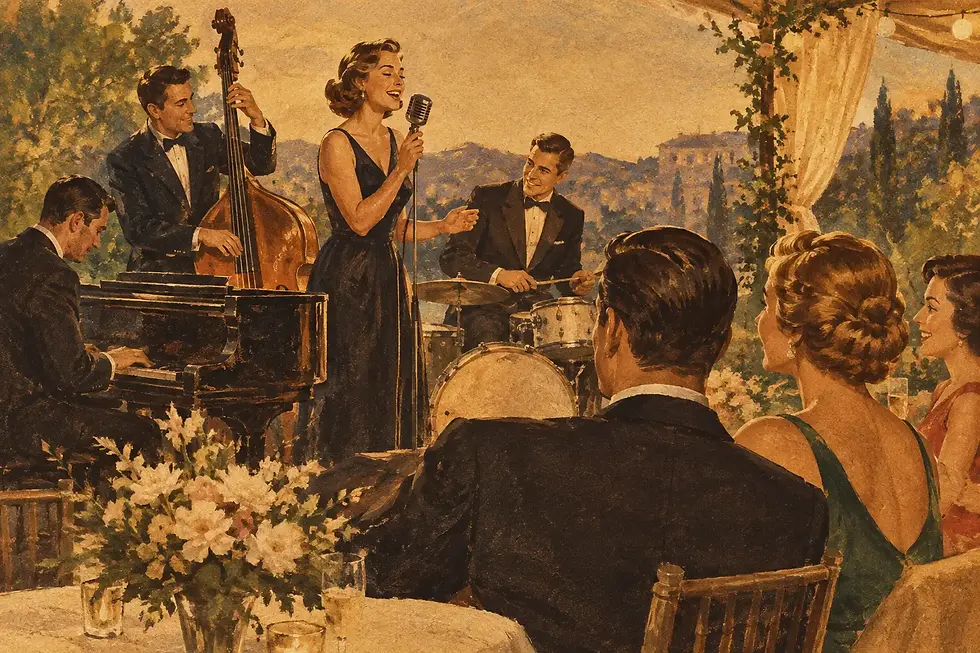
A compact quartet has a particular advantage at this stage. Double bass, drums, piano and lead vocals can create plenty of character without the visual sprawl or volume of a large party band. It feels like a performance, not an interruption.
Dinner service
Once guests are seated, the music should settle into the fabric of the evening. Dinner sets need melodic familiarity and a steady sense of pace, but they should leave space for table conversation and announcements. This is where a band should show restraint as well as flair.
Mid-tempo soul, bluesy pop and soft retro arrangements are strong choices. Think Ain't No Sunshine, Lovely Day, Sunday Morning, Your Love Keeps Lifting Me Higher and tasteful takes on newer songs from the 1980s, 1990s and beyond. The best selections have a memorable hook but do not demand everyone’s attention at once.
Volume is a practical detail that affects the entire event. If guests cannot hear the person opposite them, the music has missed the brief, however good the set list may be. Equally, music that is too cautious can make a large room feel flat. Experienced event performers adjust in real time, working with the acoustics, table layout and service rhythm rather than treating the set as fixed.
Awards, walk-ons and speeches
Awards sections benefit from short, clean musical cues. A walk-on needs enough lift to make a winner feel celebrated, yet it must not delay the presenter or turn a 20-second transition into a full production number. Bright instrumental stings, confident soul grooves and recognisable opening bars are usually more effective than a complete song.
For speeches, silence is often the right choice. It gives the speaker authority and allows the audience to focus. Music can return as guests settle afterwards, perhaps with something upbeat that resets the room before the next course or award. A good bandleader will take direction from the event producer, venue team or AV manager without fuss.
If there is a particular company anthem, campaign track or walk-on request, share it early. Some songs suit a live vintage treatment brilliantly; others are best kept as a recorded cue. The right answer depends on timing, licensing arrangements and the desired effect.
The after-dinner lift
As coffee arrives, the room often changes. Ties loosen, conversations become louder and guests are ready for a more obvious entertainment moment. This does not always mean a full dance set, but it is the point where music can become more playful and punchy.
Build towards songs with a little more snap: I Wanna Dance with Somebody, Superstition, Everybody Wants to Rule the World, No Diggity, Dancing in the Moonlight or an old-school take on a current pop hit. The most effective choices often bridge generations. Guests in their thirties recognise one reference, guests in their fifties recognise another, and everybody has something to sing along with.
There is a trade-off here. If the formal part of the evening is especially prestigious or the guest list is heavily corporate, an abrupt switch to a high-volume party set can feel out of character. A gradual rise in tempo is usually smarter. Let the first after-dinner number draw people in, then decide whether the room wants more based on its response.
Build a song list around recognition, not clichés
A gala playlist does not need to rely on the same handful of standards heard at every function. Familiarity matters, but so does surprise. The sweet spot is a song guests know, presented in a way they have not heard at the last three events.
That is why vintage arrangements work so well. A 1990s R&B track with double bass and brushed drums, or a 1980s pop anthem recast with piano and a soulful vocal, can feel both current and timeless. It creates a talking point without becoming a novelty act.
When briefing your performers, give them direction rather than attempting to programme every minute. Mention the audience profile, brand personality, key songs to include or avoid, the balance between background ambience and feature performance, and any moments that require a specific cue. Then leave room for professional judgement. A set list should respond to the people in front of it.
Avoid songs with lyrics or associations that jar with the occasion. This is particularly relevant for charity dinners, financial-sector events and brand-facing occasions, where a seemingly harmless favourite can have an unfortunate message. It is also worth considering whether the audience is international. Songs with huge UK recognition may not land in quite the same way with a global guest list.
Why live music changes the feel of a gala
A playlist is efficient, and for some events it is entirely sufficient. But live music brings timing, presence and personality that a speaker system cannot replicate. Musicians can hold a final chord while a host reaches the lectern, react to a spontaneous applause break or shift the mood when service runs late. Those small decisions make an event feel calmly managed rather than mechanically scheduled.
Visually, the right act also adds to the room. A compact, well-presented quartet can become part of the event design: elegant enough for a corner of the drinks reception, confident enough for a stage, and flexible enough to work around a changing floor plan. At Vintage Boombox, that is the appeal of new tunes, old-style - contemporary crowd appeal with the character of a properly curated live set.
A practical brief for your entertainment team
The clearest briefs cover the essentials early: guest numbers, venue and room layout, performance times, dress code, production requirements and the event timeline. Include the moments when music must stop completely, particularly speeches, video content and formal announcements. If the band is performing alongside a DJ, agree who owns which part of the night so the handover feels intentional.
Also ask one useful question: should the music be noticed, or should it lead the room? For a drinks reception and dinner, it may be there to elevate the atmosphere. For an awards finale or post-dinner set, it may be the feature. Knowing the answer helps performers choose the right repertoire, dynamics and stage presence from the outset.
Choose gala dinner songs as you would choose the menu or the lighting: with the whole experience in mind. When the music has style, shape and room to breathe, guests may not remember every track name - but they will remember exactly how the evening felt.


Comments