
What Music Works for a Drinks Reception?

The first ten minutes of a drinks reception tell you everything. Guests are arriving, glasses are clinking, introductions are being made, and the room is deciding what sort of event this is going to be. If you are asking what music works for a drinks reception, the real answer is this: music that creates instant atmosphere without hijacking the conversation.
That sounds simple, but getting it right takes more than picking a playlist labelled "chilled". The best drinks reception music is stylish, recognisable and carefully pitched to the room. It should help people relax, feel looked after and settle into the occasion, while still giving the event a clear sense of character.
What music works for a drinks reception best?
A drinks reception sits in a very particular lane. It is not background silence, and it is not a dancefloor set. It needs energy, but polished energy. It needs familiarity, but not musical wallpaper. Most of all, it needs taste.
That is why the strongest choice is usually music people know, presented with restraint and personality. Soul, jazz-inflected pop, bluesy classics, elegant reworks of 80s and 90s favourites, and contemporary songs arranged with a vintage touch all tend to land beautifully. Guests warm to songs they recognise, but the presentation matters. A stylish arrangement can make a well-known tune feel fresh rather than obvious.
There is a clear trade-off here. If the music is too anonymous, the room never quite lifts. If it is too loud, too busy or too attention-seeking, conversation becomes hard work. Drinks receptions work best when the music adds charm and momentum without demanding the spotlight every second.
Why live music often wins at a drinks reception
A well-curated playlist can do a job, but live music changes the feel of a room immediately. It gives the event a heartbeat. Guests notice it, even when they are deep in conversation, because live performance has movement, presence and a sense of occasion that recorded music rarely matches.
For event planners and hosts, that matters. A drinks reception is often about first impressions, whether it is a wedding arrival, a corporate networking hour or the opening of a private celebration. Live musicians can read the room in real time. If guests are animated, the set can open up a little. If the room needs warming, the performance can stay smooth and understated while still bringing shape to the atmosphere.
This is where smaller live formats are especially effective. A compact quartet, trio or duo can keep things elegant and spatially efficient. You get all the sophistication of live performance without the visual or sonic bulk of a full party band setup. That is often the sweet spot for venues where floor space, sightlines and guest flow matter.
The styles that work well
When people ask what music works for a drinks reception, they are often really asking which styles feel premium. The answer usually sits in a mix of familiarity and finesse.
Jazz standards can be excellent, particularly for formal venues or black-tie events, but there is a limit. Too much pure jazz can feel niche if your audience wants warmth and broad appeal. Soul is often stronger because it has groove, class and instant recognition. Pop songs reworked in an old-school style are another smart option, especially for mixed-age guest lists. They feel playful and polished at the same time.
Motown, swing-flavoured arrangements, bluesy takes on modern hits, and acoustic-led versions of well-known favourites all perform well in reception settings. The common thread is that they sound confident without becoming intrusive.
80s and 90s songs in a refined style
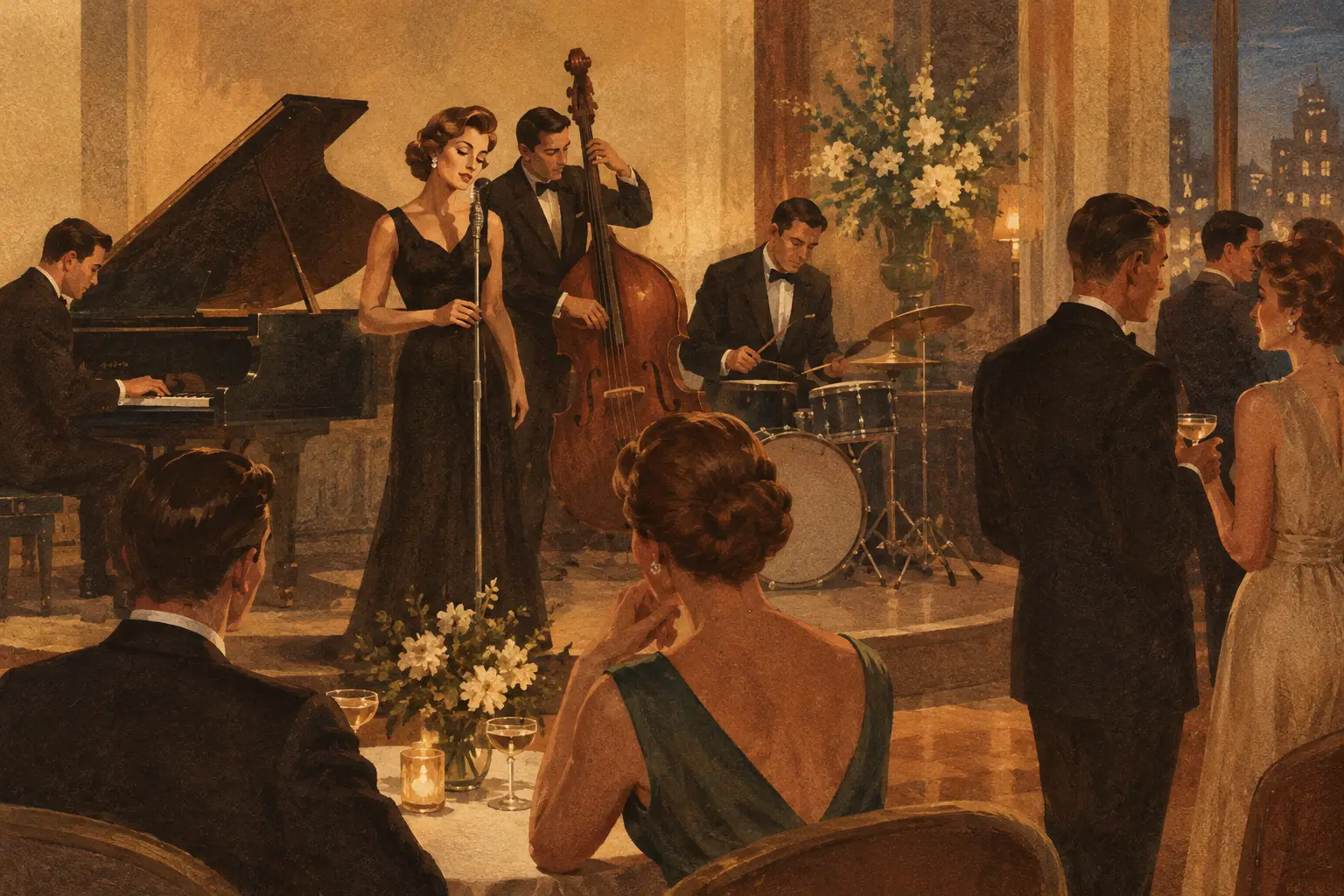
This is a particularly effective lane for drinks receptions because those decades offer huge recognition across a broad adult audience. The trick is arrangement. A straight, high-energy cover can push the room too quickly towards party mode. A more considered version, led by voice, piano, double bass and drums, keeps the nostalgia while giving it a more elegant frame.
That balance is powerful. Guests hear something they know and love, but the mood stays elevated. It feels curated rather than generic.
Jazz, soul and blues for warmth
If the goal is sophistication, these styles are reliable for good reason. They flatter the room. They suit hotels, private clubs, galleries, terraces and event spaces with architectural character. They also sit well under conversation, provided the performance is controlled.
The watch-out is tempo and density. Slow does not always mean classy, and busy does not always mean exciting. The best sets have shape - a little swing, a little soul, a touch of playfulness, and enough variation to keep the atmosphere alive.
What music works for a drinks reception at different events?
Context matters. The right music for a wedding drinks reception is not always the same as the right choice for a corporate event or private party.
At weddings, guests are usually primed for romance, celebration and familiarity. Music can lean a little more emotional and a little more expressive, especially if the reception follows the ceremony. Recognisable love songs, soulful classics and upbeat vintage-style reworks all work beautifully here.
At corporate receptions, the brief is often more strategic. You want polish, professionalism and enough personality to stop the event feeling flat. Music should support conversation and networking, not compete with it. Smart arrangements of well-known songs work especially well because they keep the room engaged without tipping into anything too casual or too raucous.
For private parties, there is often more room for character. If the host has strong taste, the music can reflect it. This is where a band with a clear style earns its keep. Rather than offering a generic function-band set, a distinctive act can shape the mood of the whole event.
Volume is as important as song choice
One of the biggest mistakes at a drinks reception is treating volume as an afterthought. Even brilliant musicians can lose the room if guests have to shout over the band to order a drink or introduce themselves.
Good drinks reception music sits at a conversational level with enough presence to colour the atmosphere. That does not mean timid or apologetic. It means controlled. Experienced performers know how to project without overpowering. They also know that acoustics vary wildly from one venue to the next. A stone-walled barn, a glass-heavy atrium and a carpeted private dining room all behave differently.
For organisers, this is where professionalism matters as much as repertoire. A stylish band that understands event dynamics is worth far more than a louder band with a longer song list.
Why recognisable songs matter
At a drinks reception, guests are usually doing several things at once. They are chatting, arriving, observing, moving through the space and taking cues from the room. Music does not need to command full attention, but it does need to connect quickly.
Recognisable songs do that fast. They give guests little moments of delight. A familiar chorus in a fresh arrangement can spark a smile, loosen the atmosphere and make the event feel more considered. It becomes part of the guest experience rather than sonic filler.
That said, familiarity needs curation. If every song is an obvious crowd-pleaser delivered in the most expected way, the music loses distinction. A more tailored approach is stronger - songs people know, performed with craft, character and a clear point of view.
The best setup is often smaller than you think
There is a tendency to assume that bigger means better. For a drinks reception, that is rarely true. A compact live band often does the job more effectively because the format suits the occasion.
Smaller ensembles leave space in the room, both physically and musically. They can tuck neatly into a corner, dress the setting visually and still sound full. They also feel more flexible, which is useful when timings shift or guest numbers fluctuate.
This is one reason a group like Vintage Boombox works so well in reception settings. A small-footprint lineup with double bass, drums, piano and powerhouse vocals brings genuine live presence, but with a refined shape that suits sophisticated events. New tunes, old-style is not just a musical idea - it is exactly the sort of twist that keeps a reception feeling polished and memorable.
How to choose the right music for your own reception
Start with the room, not just your favourite songs. Think about guest profile, venue style, event purpose and when the reception sits within the wider schedule. Ask whether the music needs to soothe, impress, animate or bridge into the next part of the event.
Then think in terms of atmosphere rather than genre labels alone. "Jazz" can mean intimate and tasteful, or abstract and inaccessible. "Pop" can mean elegant and widely loved, or loud and disposable. What matters is how the songs are arranged, how the musicians perform them and whether the whole thing feels right for the crowd.
A good rule is this: if guests can talk easily, feel the energy in the room, and occasionally turn towards the music with a smile, you are in the right territory.
The best drinks reception music does not bully the event or fade into nothing. It adds gloss, personality and confidence. Choose music with charm, recognisable songs with style, and performers who know how to read a room, and the reception will feel good from the first glass onward.


Comments