
How Long Should Reception Music Last at a Wedding?

The room is filling, glasses are being poured and the first photographs are happening. This is the moment when music does more than fill a silence: it sets the social temperature. So, how long should reception music last? For most weddings and polished private events, two hours is the sweet spot. It gives guests time to arrive, settle in and enjoy the atmosphere without making the entertainment feel like a full evening show.
That said, the right duration depends on the shape of your day. A compact live quartet can create a stylish thread through drinks, dinner or a corporate welcome, but the timing needs to serve the event rather than simply occupy a slot in the schedule.
How Long Should Reception Music Last?
A drinks reception usually lasts between 90 minutes and two hours. For this format, live music across the full reception is generally ideal. It gives the set room to breathe, allows for natural breaks and keeps the energy lifted while guests chat, collect drinks and move between the bar, terrace and photo moments.
If your reception is a brisk 60 minutes, one strong live set can work beautifully. It feels intentional, rather than trying to squeeze two short bursts of music into a tight window. At the other end, a two-and-a-half-hour reception may call for two or three sets with considered pauses, particularly if the drinks reception rolls into a relaxed meal.
The key is not to book the longest possible performance. Book enough music to cover the moments when atmosphere matters most. Guests do not need a concert before dinner. They need a room that feels welcoming, animated and effortlessly well put together.
Start With the Event Timeline, Not the Playlist
Reception music is often planned after catering, photography and speeches. In reality, it should be considered alongside them. The music has a practical job: smoothing over transitions that can otherwise feel slow or slightly awkward.
At a wedding, that may mean playing as guests arrive from the ceremony while the newlyweds are away for photographs. At a corporate function, it may be the first hour after registration, when colleagues and clients are finding their feet. At a private party, it could be the period before the host makes an entrance or dinner is announced.
A useful rule is to identify the first and final guest-facing moments. If guests begin arriving at 4pm and are called to dinner at 6pm, music from 4.15pm to 5.45pm is often more effective than performing right up to the announcement. A little space at the end gives the coordinator time to gather the room and move everyone on cleanly.
The 90-minute reception
Ninety minutes suits smaller weddings, city venues and events with a prompt dinner service. One 60-minute set followed by a shorter second set works well, or the band can perform through with a brief, unobtrusive pause if the schedule is especially tight.
This format benefits from a focused musical arc. Start warm and welcoming, build a little sparkle as more guests arrive, then finish with recognisable favourites that leave the room buoyant before the next part of the event.
The two-hour reception
For many couples and planners, two hours is the most comfortable booking length. It provides flexibility if the ceremony runs late, photographs take longer than expected or guests linger over another drink. Two 45-minute sets with a break in between is a classic arrangement, though timings can be tailored around the flow of the day.
It also gives a live act room to vary the feel. A vintage-style take on contemporary pop can sit elegantly beside soul, jazz and 1980s classics, offering plenty of familiarity without turning the drinks reception into a dancefloor too early.
Receptions over two hours
Longer receptions are common when there is a sizeable gap between ceremony and meal, when the venue has outdoor spaces, or when an awards event includes extended networking. Here, plan for performance sets rather than continuous high-energy output.
Two or three sets across the period maintain freshness. The intervals are useful too: guests can speak more easily, staff can reset areas and the next stage of the event can be prepared. Background playlist music during breaks can preserve continuity, but the live sets should remain the feature.
Match the Music to the Room
Duration and volume belong in the same conversation. A reception band should enhance conversation, not compete with it. This is why a small-footprint live line-up is such a strong fit for drinks receptions: it brings real performance, visual character and a sense of occasion without swallowing the room.
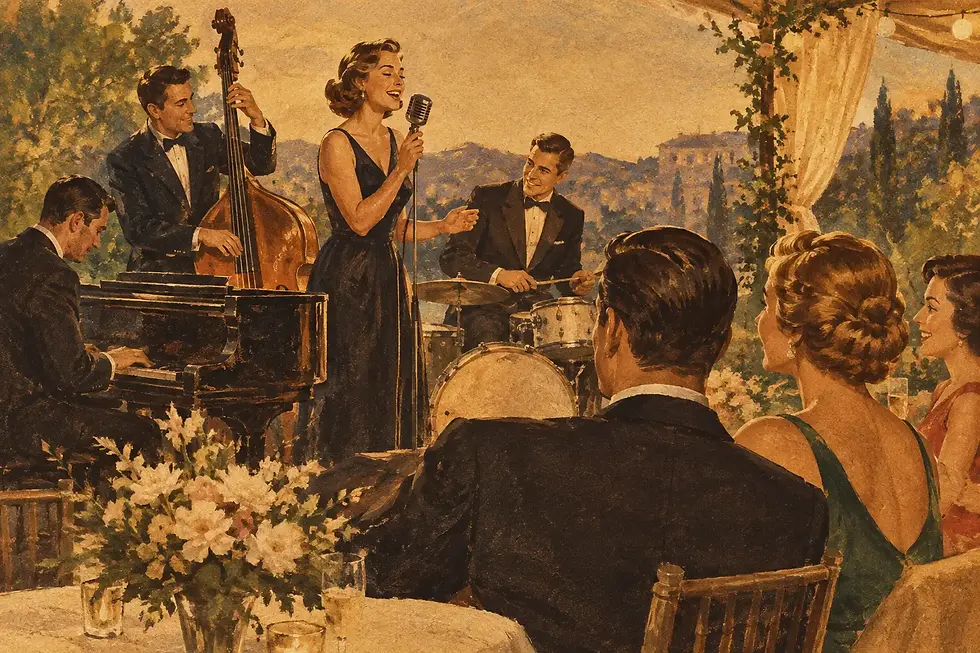
For a gallery, hotel lounge, country house or private dining space, the ideal reception sound is present but poised. Guests should notice the music immediately, then be able to talk naturally over it. Double bass, piano, drums and powerful vocals can create a rich sound at a considered level, particularly with arrangements designed for the room rather than a late-night club.
The guest profile matters too. A client-facing corporate drinks reception may call for polished groove and understated recognisable songs. A wedding crowd can often take a little more lift as the afternoon unfolds. Neither approach is better. The right choice is the one that reflects what you want guests to feel when they walk in.
Leave Space for the Moments That Matter
A well-timed reception performance should accommodate the realities of an event. Photographers may want a few minutes of calm for group shots. A venue manager may need to announce dinner. A bride and groom may want to greet every guest without having to shout over a favourite chorus.
Share your running order with the musicians before the day, including ceremony finish time, drinks service, photographs, speeches, meal call and any planned surprise. Experienced performers can adapt when timings shift, but they can only do their best work when they understand the intended flow.
It is also worth deciding whether you want a specific entrance song, a gentle musical cue for the cutting of the cake, or a livelier final number before dinner. These details are not essential, but they can make the reception feel distinctly yours. Keep them selective. One or two properly placed musical moments land better than trying to soundtrack every movement.
Should Reception Music Continue During Dinner?
Usually, not at full reception intensity. Dinner music has a different role. If you would like live performance during the meal, lighter and shorter sets are often more effective than continuous singing throughout service. Guests need space to speak, and caterers need a calm room in which to work.
For some events, the best answer is to end the reception set as dinner is called and bring the band back later for a featured performance. This creates contrast. The music that welcomed everyone becomes the music that draws them together later on.
For others, particularly brunches, launch events and relaxed Sunday celebrations, music can continue through dining at a softer level. It depends on the venue acoustics, table layout and whether conversation or entertainment is the main priority.
A Simple Booking Framework
When deciding how long to book reception music, begin with the event type and work forwards:
For a one-hour welcome or champagne reception, book one purposeful live set.
For a 90-minute to two-hour drinks reception, plan for around two sets with a short break.
For a reception lasting more than two hours, use multiple sets and let the schedule dictate the pauses.
For a day-to-evening celebration, consider separate reception and party performances rather than asking one set of music to do every job.
This approach keeps the entertainment feeling curated. It also helps you spend your budget where guests will feel the difference most.
The Best Length Is the One That Keeps the Energy Moving
There is no prize for keeping live music running from the first canapé to the final coffee. The most memorable receptions have pace. They allow people to arrive, mingle, laugh, take photographs and enjoy the sense that something special is happening around them.
For most occasions, two hours of stylish live music is ample. It is long enough to establish a real atmosphere and flexible enough to absorb the small timing changes that happen at every event. Vintage Boombox brings that balance to life with new tunes, old-style: familiar songs, elegant arrangements and a performance that knows when to lift the room and when to let it breathe.
Plan the music around your guests, not the clock. If the room feels warm, sociable and a little more glamorous by the time everyone moves on, you have booked exactly the right amount.


Comments