
Charity Auction Music That Lifts Every Bid

The room goes quiet just before the first lot is introduced. Guests have settled in, glasses are topped up, and the auctioneer is ready to take control. Charity auction music has done its job when that moment feels expectant rather than awkward: it has welcomed people in, established the tone and made the evening feel worth supporting before a paddle is ever raised.
For a fundraising dinner, gala or awards evening, music is not simply a pleasant extra. It shapes how guests arrive, mingle, spend and remember the occasion. The right live act adds character without taking over the room, then knows precisely when to step back so the charity, host and auctioneer remain centre stage.
Choosing Charity Auction Music for the Room
The best musical choice depends on the shape of the event. A black-tie gala in a hotel ballroom needs a different energy from a lunchtime auction in a private members' club, or a lively charity party following a corporate conference. What should stay consistent is a sense of occasion: polished performance, familiar songs and a volume level that respects conversation.
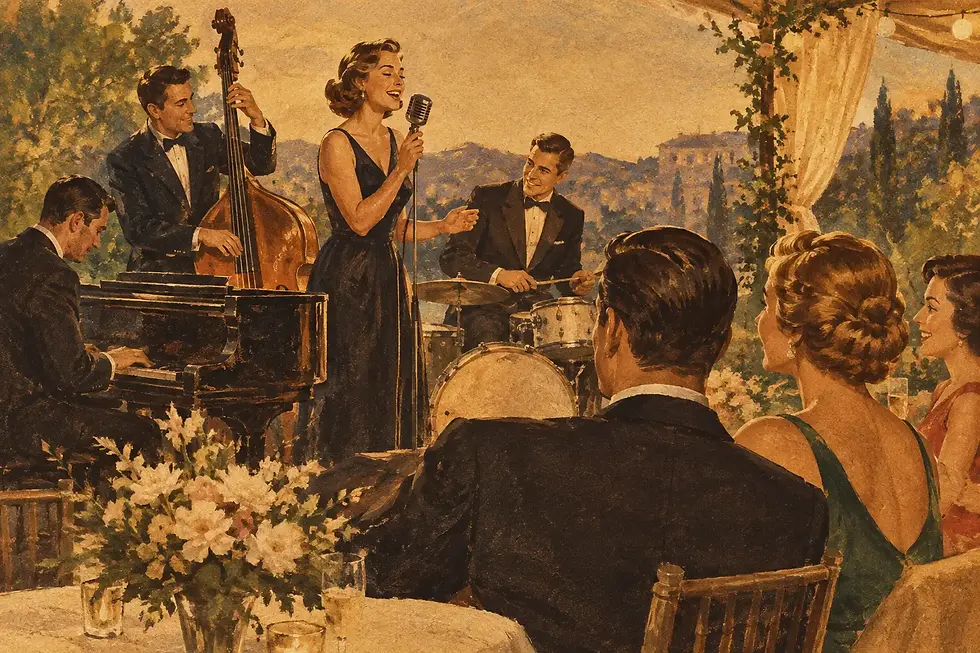
A small live band is particularly effective for drinks receptions and dinner service because it brings a visible sense of quality without demanding a vast stage or an overcomplicated technical set-up. Double bass, piano, light drums and expressive vocals can fill a room with warmth while leaving guests free to network, catch up and browse the silent-auction prizes.
Song selection matters as much as instrumentation. Recognisable pop, soul and jazz tunes arranged with a vintage twist tend to land beautifully with mixed-age rooms. Guests enjoy the surprise of hearing a favourite 1980s or 1990s song recast with swing, soul or blues flavour. It feels curated rather than predictable, and creates an easy talking point before the formal programme begins.
There is a trade-off, of course. If the purpose of the reception is high-level conversation with major donors, subtle sophistication wins. If the event is designed to turn into a celebration after the final lot, the band needs the range to build towards a more energetic featured set. Booking music that can do both is often better value than treating each part of the evening as a separate entertainment problem.
Give Each Fundraising Moment Its Own Energy
An auction event has natural changes of pace. Music should follow them rather than play at one unchanging level all night.
Arrival and drinks reception
This is where atmosphere earns its keep. Guests may be arriving from work, finding their table or meeting people they have not seen for months. Stylish, upbeat background performance gives the room a pulse without forcing anyone to shout across a canapé.
Choose music with personality, but avoid making it too intense too early. A compact quartet can make an entrance feel special while keeping sightlines open for welcome signage, prize displays and sponsor branding. It also avoids the empty-stage effect that can make a premium venue feel strangely flat before the programme begins.
Dinner and speeches
During the meal, the priority is measured volume and dependable professionalism. The band should understand when to pause for speeches, video content, award presentations and appeals. That sounds obvious, but it is the difference between entertainment that supports an event and entertainment that creates work for the organiser.
Brief the musicians on the running order, including approximate speech timings and any surprise moments. A vastly experienced event act will expect timing changes and be ready to adapt. Fundraising evenings rarely run to the minute, particularly when a guest speaker is on a roll or the silent auction is attracting serious interest.
The live auction itself
When bidding starts, clarity is everything. The auctioneer must be heard instantly, and guests need space to concentrate on the lot, the bid and the cause. In most cases, live music should stop completely once the auction begins.
That does not mean the room must lose its energy. A short musical sting before the auctioneer takes the microphone can create a confident transition from dinner to fundraising. A well-timed walk-on track, a fanfare-style flourish or a final upbeat number says that something important is about to happen. Then silence gives the auctioneer the authority they need.
Discuss these cues in advance with the event producer or auctioneer. Agree who gives the signal, where the band will be positioned, and whether there are designated musical moments for a headline lot, a pledge appeal or the close of bidding. Keep the cues short and purposeful. The goal is momentum, not a soundtrack underneath every bid.
After the final hammer
Once the auction closes, guests need a release. This is the moment to announce a total, thank sponsors and bring the room back into celebration mode. Music can make that transition feel triumphant, especially if the fundraising result has exceeded expectations.
For some events, a single high-impact set after the auction is enough. For others, a band can move naturally from dinner ambience into a party set that keeps guests in the room longer, encourages another round at the bar and gives the evening a proper finale. The right decision comes down to the audience, venue curfew and whether guests are expected to make an early departure or stay for dancing.
Work With Your Auctioneer, Not Around Them
A charity auction is a live performance in its own right. The auctioneer, host, production team and musicians need a shared view of the room. Too many competing voices can dilute the urgency that makes people bid generously.
Ask your entertainment provider practical questions before booking. Can they work from a precise running order? Are they comfortable holding or extending a set if dinner runs late? What sound equipment do they provide, and can it work with the venue's microphone requirements? Can they provide discreet background music during gaps, or does every transition need a separate playlist?
The answer may depend on the venue. A grand ballroom with in-house production has different requirements from a gallery, country house or restaurant private room. Compact staging is a real advantage where space is tight, but even a small footprint needs sensible access, power and a clear set-up window. Good planning protects the look of the room as well as the sound.
It is also worth deciding who owns the music brief. A committee may have plenty of favourite songs, but a long request list can pull the performance in too many directions. Give the band a clear steer on the guest profile, desired mood and a handful of must-play moments, then let experienced performers build a coherent set around that information.
Why Live Music Makes a Stronger Impression
A playlist is useful for filling silence. Live music does more: it signals care. Guests can see and feel that the evening has been put together with intention, from the first welcome through to the final thank-you.
That is especially valuable for charities seeking repeat support. Major donors and corporate tables are not only responding to a cause; they are responding to an experience they will be happy to attend again, bring colleagues to and talk about afterwards. Thoughtful entertainment helps turn a fundraising obligation into a date people genuinely want in their diary.
Vintage Boombox brings new tunes, old-style: contemporary and nostalgic favourites reworked for piano, double bass, drums and powerhouse vocals. The result suits elegant receptions, formal dinners and post-auction celebrations alike, with a stylish presence that enhances the room rather than overwhelming it.
Plan the Music Early, Then Let the Night Breathe
Music is easiest to book early, alongside the venue and auctioneer, because these three choices affect the flow of the entire evening. Share the draft schedule well before the event, allow for realistic set-up time and make one person responsible for on-the-night decisions. That gives the performers a clear route to follow when timings shift.
Most importantly, choose charity auction music that feels aligned with the generosity you are asking of your guests. When the room feels welcoming, considered and alive, people are more inclined to stay present for the cause - and perhaps raise their paddle one more time.


Comments