Questions About Booking Live Entertainment
- Cormac Moore
- Jul 24
- 5 min read

The moment guests arrive tells them what sort of evening they are about to have. A DJ playlist can fill a room, but the right live act can give a drinks reception, dinner or launch event its character from the first song. The most useful questions about booking live entertainment are not just about price and availability. They are about atmosphere, practicality and whether the music will feel right for the people in the room.
For a wedding planner balancing a packed schedule, a corporate host protecting a brand experience or a party organiser with one big night to get right, the details matter. Great entertainment should look considered, sound exceptional and make the event feel more like itself.
Start with the feeling you want to create
Before asking a band for a quote, decide what role music needs to play. Is it there to welcome guests with warmth while conversation flows? Should it lift the energy after dinner? Or does the event need a featured set that gives everyone a reason to stop, watch and stay a little longer?
This distinction shapes almost every booking decision. A high-energy party band may be ideal when dancing is the main event, but it can be too much for a gallery opening, networking drinks or a refined wedding reception. Equally, background music that is beautifully played but too understated may not land in a large, lively room.
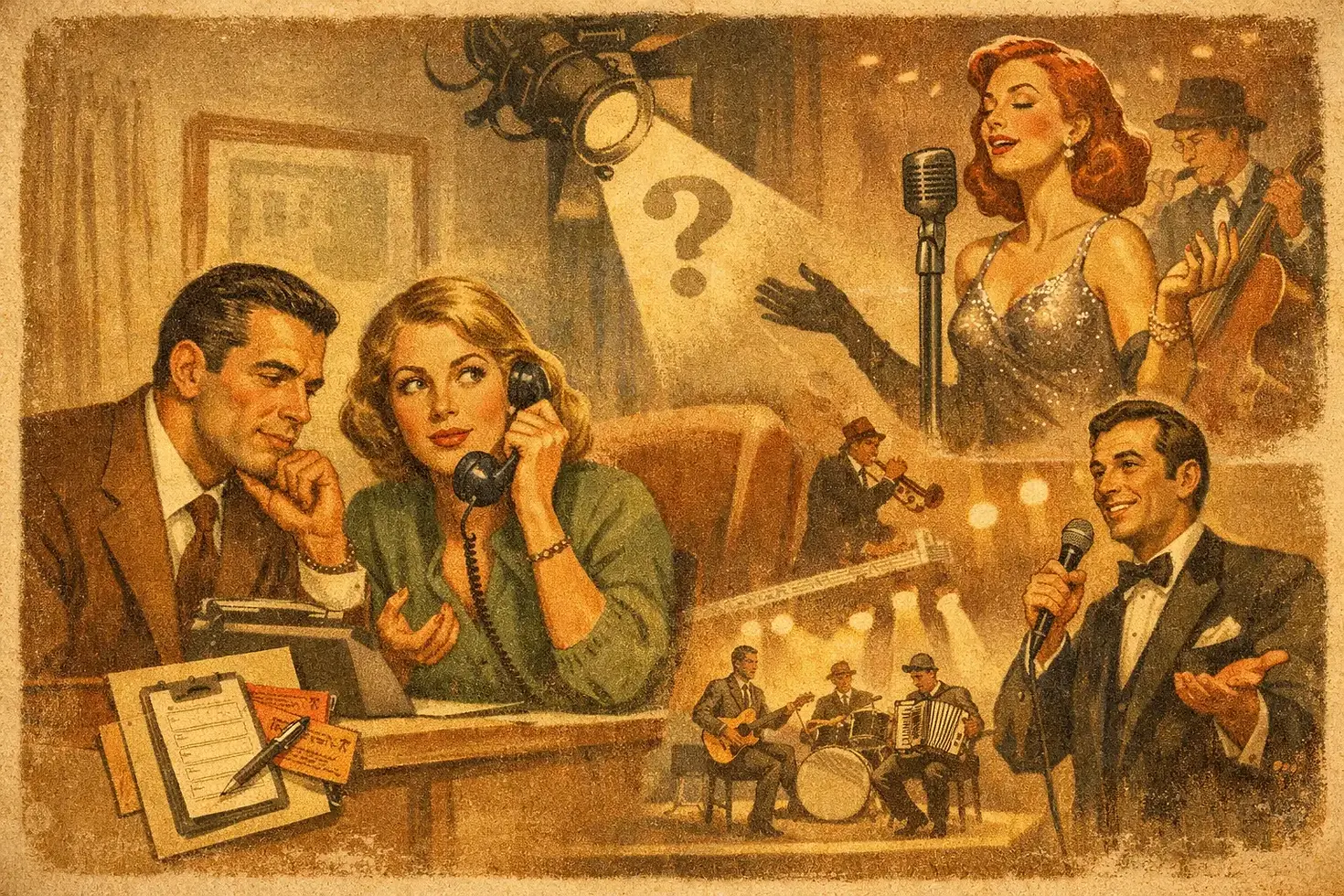
A compact live quartet gives organisers a particularly flexible middle ground. With double bass, drums, piano and vocals, Vintage Boombox brings the visual appeal and immediacy of a live performance without turning a reception area into a full-scale concert venue. Familiar songs arrive with a stylish new tune, old-style twist - recognisable enough to connect, polished enough to suit the setting.
Questions about booking live entertainment that matter first
Is the act right for our audience?
An experienced act should be able to describe its repertoire in terms of your guests, rather than simply sending over a long song list. A room of mixed generations often responds brilliantly to well-known pop, soul and classic party material, especially when the arrangements have character. The aim is not to please every individual song request. It is to create a shared mood.
Ask how the musicians read a room and how their sets are shaped across the event. A drinks reception may call for cool, upbeat arrangements that sit comfortably beneath conversation. Later, the same musicians might build towards more recognisable, celebratory material. The strongest performers understand that pacing is part of the service.
What will the band actually sound and look like?
Video matters, but so does context. A performance filmed on a festival stage can feel very different from a band playing in the corner of a candlelit dining room. Ask for a clear picture of the instrumentation, vocal style and general presentation, then imagine it in your venue.
A vintage-inspired act should feel intentional rather than costume-like. The appeal is in taking songs guests know from the 1980s, 1990s and beyond, then reshaping them with jazz, soul, blues and pop influences. That gives an event a distinctive musical signature without asking guests to work too hard to recognise the tunes.
How much space and power will be needed?
This is one of the practical questions that prevents last-minute compromises. Find out the performance area required, whether the band brings its own sound equipment and what power supply is needed. A small footprint is valuable at venues where every metre is already allocated to tables, a bar, florals or a photo moment.
Also ask where the performers will load in, how long they need to set up and whether stairs, restricted access or parking arrangements affect the plan. Historic buildings, rooftop venues and central-city hotels can all present challenges, but a vastly experienced event band will be used to working around them. Share the venue information early and there is usually a sensible solution.
Can the volume suit the room?
Live music does not have to mean competing with conversation. For receptions, brunches and dinners, the best level is often one that adds energy without making guests lean across the table. For an evening party or staged presentation, the brief may be completely different.
Be clear about the point in the schedule when you want the sound to rise. Ask whether the act can provide separate set formats or adjust its production accordingly. Venue sound limiters are worth mentioning at the outset too. They are manageable when everyone knows they are there, but frustrating when discovered during the first number.
Match the performance to the event timetable
Timings are not an administrative detail. They affect how the entertainment feels. A band arriving as guests are taking their seats needs a discreet setup plan; musicians performing at a product reveal need precise cues; wedding entertainment must work around speeches, photographs and catering.
Give the act a working schedule, even if it is still provisional. Include guest arrival, meal service, speeches, room turns, key announcements and finish time. Then ask where live sets will have the biggest impact. Often, shorter performances placed at the right moments do more for an event than a long set dropped into the wrong part of the evening.
It is also wise to confirm break music. If there is a pause between sets, does the band provide a curated playlist through its system, or will the venue handle the music? A quiet gap can flatten momentum, particularly at corporate celebrations and private parties where guests need a little encouragement to stay in the room.
Be precise about the quote
A professional quote should make the booking easy to understand. It should set out the performance format, number and length of sets, arrival and finish times, travel, equipment, VAT where applicable, and any extra costs that could arise from late finishes or difficult access.
The cheapest option is not always the best value. A lower quote may cover fewer musicians, less suitable equipment, shorter playing time or no allowance for event coordination. On the other hand, there is no reason to pay for a larger production if your event is an intimate drinks reception. The right investment depends on the brief, venue and guest count.
Ask about the deposit, final payment date and cancellation terms before committing. This is especially useful for events planned many months ahead, when dates, guest numbers or venue details can still shift. Clear terms protect both the organiser and the performers, leaving less room for uncomfortable conversations later.
Do you need special requests?
A first dance, walk-on song, awards sting or key client favourite can make an occasion feel personal. Raise these requests early, particularly if you want a song arranged in the act's own style. Some songs translate beautifully into a vintage arrangement; others rely so heavily on studio production that they need a different approach.
The same applies to playlists. A thoughtful request list helps musicians understand your taste, but an overly rigid running order can work against the room. Give the act a few must-plays, a few definite avoids and a clear sense of the desired energy. Then allow experienced performers the freedom to respond to your guests.
Ask about professionalism beyond the music
The best live entertainment is easy to work with. That means punctual arrival, smart presentation, courteous communication and an understanding of how events operate behind the scenes. For planners, this reliability can be as valuable as a brilliant vocal or a knockout arrangement.
Ask whether the performers are comfortable taking direction from a venue manager, wedding coordinator or production team. Confirm their dress code, insurance and any venue paperwork required. These may not be glamorous questions, but they are the questions that keep a polished event polished.
A good booking conversation should leave you feeling that the entertainment is already under control. Bring the band into the plan early, give them an honest brief and choose music with enough personality to make the occasion memorable. When the first familiar chorus arrives in a fresh, elegant arrangement, guests will know they are somewhere worth celebrating.


Comments